Regulations
EECA's approved smart EV charger list, and the rules about to become compulsory
EECA's approved smart EV charger list explained: which residential models are on it, why Tesla and Zappi aren't, and the 2.4kW rules Cabinet has agreed.
In short
EECA publishes a voluntary approved list of smart EV chargers that meet its technical specification. There are currently 16 residential models from 13 brands. Being absent doesn't mean a charger is bad or illegal; suppliers opt in. That changes soon: Cabinet agreed in May 2026 to require every charger over 2.4kW sold in NZ to have smart functionality and an efficiency label.
If you’re buying a home EV charger in New Zealand right now, you’re buying into a market that is about to be regulated. EECA publishes a voluntary approved list of smart chargers, and Cabinet has agreed to make smart functionality compulsory for almost every charger sold here. Neither fact is well covered, and both change how you should choose hardware today.
Here’s what’s actually on the list, what the new rules say, and what it means for a purchase you’re making this year.
The short answer
EECA’s EV Smart Charger Approved List names chargers that meet its technical specification for smart functionality and energy efficiency. As at the 10 June 2026 version, the residential single-phase list holds 16 distinct models from 13 brand names, and the commercial list is considerably longer.
Being on the list is voluntary and supplier-initiated. A charger’s absence tells you the supplier hasn’t applied, not that the charger is inferior, unsafe or non-compliant. Several of the best-known chargers sold in New Zealand are not on it.
That voluntary status is the part that’s changing. On 5 May 2026 the Government announced Cabinet had agreed to require EV chargers over 2.4kW supplied in New Zealand to have minimum smart functionality and carry an energy-efficiency label, via changes to the Energy Efficiency and Conservation Act 2000 (MBIE).
What the EECA list is, and what it isn’t
EECA describes the list as covering chargers “approved by EECA based on efficiency and smartness” (EECA). It’s published as a downloadable Excel and PDF file with three parts: residential single-phase, commercial, and a short additional list of two-way (V2X) chargers.
Three limits are worth understanding before you treat it as a shopping list.
It is voluntary. EECA’s process is that a supplier applies online, and any EV supply equipment is eligible for registration provided it meets the performance criteria in the technical specification and the required information is supplied. Nobody is compelled to apply, and there’s no penalty for staying off it.
It is not a safety approval. EECA states plainly that electrical safety and grid connectivity “are not covered by EECA’s approved products list”. Those are separate regimes. Whatever hardware you choose, the installation is prescribed electrical work that must be done by a Registered Electrician who issues a Certificate of Compliance.
It is not a ranking. There’s no scoring, no tiering and no “best” designation. A charger either meets the specification or isn’t listed. For choosing between models, the home charger comparison guide is the more useful starting point, and the smart charger guide explains which features actually earn their keep.
One further caveat on the two-way section: EECA does not currently have a specification for bidirectional functionality at all. Chargers in that list were assessed against the ordinary smart-charging specification, and EECA states it “has not assessed or endorsed the bi-directional (V2X) functionality of these chargers at this time”. If you’re exploring that territory, see the V2G, V2H and V2L guide.
What’s on the residential list
These are the single-phase residential models in the 10 June 2026 version. Maximum output is as listed by EECA; where a model also has a three-phase variant on the list, that’s noted.
| Brand | Model | Max output |
|---|---|---|
| ABB | Terra AC 3.7kW | 3.7kW |
| ABB | Terra AC 7.4kW | 7.4kW |
| DAHUA Technology | Intelligent EV Charger | 7.4kW (also 11kW / 22kW three-phase) |
| EnergySmart | Velocity | 7.4kW |
| EO | Mini Pro 3 | 7kW |
| Etrel | Inch Pro | 7.4kW (also 22kW three-phase) |
| EV Power | EcoCharge Wall Charger 7kW (OCPP) | 7kW |
| EVPower | Ecolink | 7.4kW |
| EVPORT | Home Charger AC 7.4kW | 7.4kW |
| Ocular | IQ Home | 7.4kW (also 22kW three-phase) |
| Ocular | IQ Solar | 7.4kW (also 22kW three-phase) |
| Orbis | Viaris Combi + | 7.4kW (single or dual connector) |
| Orbis | Viaris Uni | 7.4kW |
| Smart EV Chargers | Smart EV Wall Charger with DLB | 7.4kW |
| Teltonika Energy | TeltoCharge | 7.4kW |
| Wallbox | Pulsar Max | 7.4kW |
Two things stand out. Almost everything clusters at 7–7.4kW, which reflects what a standard NZ single-phase home supply comfortably supports. The 7kW vs 22kW question is mostly settled by your supply rather than your preference. And the residential sheet is single-phase only. If you have three-phase supply at home, several home-suitable units sit on the commercial list instead, mixed in with genuine commercial and DC hardware. That’s a quirk of how the list is organised rather than a statement about where the charger belongs.
Why Tesla, Zappi and Evnex aren’t on the residential list
This is the most common way to misread the list, so it’s worth being direct.
As at the 10 June 2026 version:
- Tesla appears on neither the residential nor the commercial list.
- myenergi (Zappi) appears on neither.
- Evnex and Schneider Electric appear on the commercial list only.
All four are established, widely installed, reputable chargers, and two of them are among the most commonly requested brands in New Zealand homes. Their absence is a statement about who filled in a voluntary application, not about product quality.
If a retailer or installer implies that a charger must be EECA-listed to be worth buying, that’s a sales position, not a regulatory fact. The Tesla Wall Connector, Evnex and Zappi guides cover those units on their merits.
The rules that are coming
On 5 May 2026 the Government announced that Cabinet had agreed to regulate smart EV chargers. The key points, as announced:
- Scope: EV chargers with a maximum charge rate over 2.4kW supplied in New Zealand.
- Requirements: minimum smart functionality, plus labelling showing energy efficiency performance and smart characteristics.
- Mechanism: changes to the Energy Efficiency and Conservation Act 2000.
- Timing: the Government said it intends to introduce the legislation to the House during 2026. No commencement date for the requirements has been announced.
The 2.4kW threshold is the detail that matters most. That’s approximately the output of a standard 10A three-pin trickle charger, the basic cable that comes in the boot of most EVs. Setting the line just above it means essentially every wall-mounted home charger sold in New Zealand falls inside the scope, while the emergency portable cable falls outside it. This is not a niche rule aimed at a handful of products.
EECA’s stated rationale is grid load: shifting charging off-peak defers network upgrades and keeps bills lower. Its own comparison is that charging at home off-peak is currently like buying petrol at around $1.60 a litre, including road user charges, which lines up with our own EV vs petrol running-cost numbers once RUC is included.
What this means if you’re buying now
Don’t disqualify a charger for being off the list. It’s voluntary, several excellent units aren’t on it, and the list has no bearing on whether an installation is legal.
Do buy a charger with genuine smart functionality. This is the practical takeaway. The direction of travel is now settled government policy, so a basic non-smart wallbox is a purchase with a limited future. Not because it will be ripped out, but because it is the category the market is being moved away from. Scheduling and app control are worth having on their own merits anyway; see the smart charger guide.
Ask the supplier about labelling. Once the labelling requirement is in force, chargers will carry an efficiency and smart-capability label. If you’re buying in the transition period, asking a supplier whether their model is expected to comply is a fair question, and a vague answer is informative.
Don’t wait for the law. There’s no announced commencement date, and legislation has only been signalled for introduction. If you need a charger this year, buy a good smart charger this year.
What this means if you already have a charger
Nothing, on the information announced so far. The Cabinet decision addresses chargers supplied in New Zealand: the point of sale and import. There is no announced requirement to replace, retrofit or re-certify an existing installation, and no announced compliance obligation on homeowners.
If your existing charger isn’t smart and you’d like off-peak scheduling, that’s usually achievable through your power plan or a timer rather than new hardware. The EV power plans guide covers the options.
We’ll update this page as the legislation is introduced and the detail firms up.
What to send for an accurate quote
Hardware choice and installation are separate decisions, and the install is where the cost variation actually lives. To get a realistic quote:
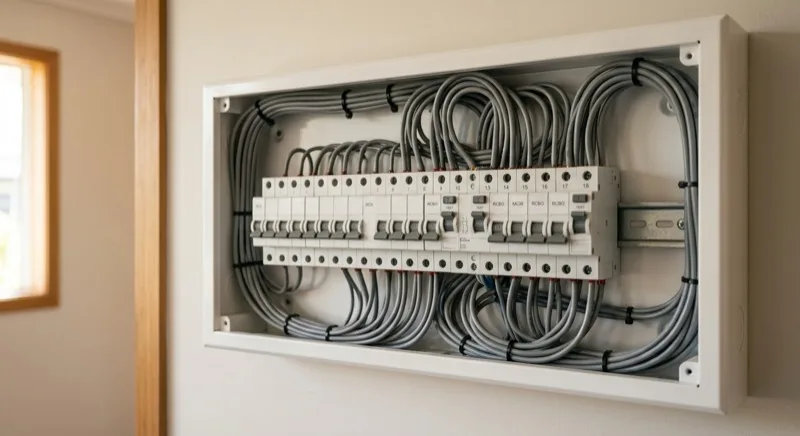
- A photo of your switchboard (door open if safe): lets the installer assess capacity, check earthing, and flag an upgrade early.
- A photo of your parking location: garage, carport or driveway; covered or open.
- Approximate cable route from the switchboard to the charger position, including distance and obstacles like solid walls or paving to trench under.
- Your EV make and model: confirms the Type 2 connector and your car’s maximum AC charge rate.
- Whether you have single-phase or three-phase supply, if you know it.
- Any charger you’re already considering, including whether it needs to be on the EECA list for your own reasons.
Installed cost for a standard 7kW single-phase job with no switchboard work sits indicatively around $1,500–$2,500. Switchboard upgrades, long cable runs and trenching push that up; the installation cost guide breaks down every variable.
Request a quote from a local installer and include the details above.
Frequently asked questions
What is the EECA approved smart EV charger list?
It's a list EECA publishes of EV chargers that meet its technical specification for smart functionality and energy efficiency. EECA describes them as approved 'based on efficiency and smartness'. It covers residential single-phase chargers, commercial chargers, and a short additional list of two-way (V2X) chargers. It is published as a downloadable Excel and PDF file and is updated periodically.
Does my EV charger have to be on the EECA approved list?
No. Inclusion is voluntary and supplier-initiated: a supplier applies online, and EECA lists the charger if it meets the technical specification. A charger that isn't on the list is not illegal, unsafe, or non-compliant. It usually just means the supplier hasn't applied. That is expected to change once the Government's new smart-charger requirements become law.
Why aren't Tesla or Zappi on the EECA approved list?
Because their suppliers haven't applied. As of the 10 June 2026 version of the list, neither Tesla nor myenergi (Zappi) appears on the residential or commercial lists, and Evnex and Schneider appear only on the commercial list. These are all widely sold, reputable chargers. The list reflects who opted in, not a ranking of quality.
Is the New Zealand government making smart EV chargers compulsory?
Cabinet agreed on 5 May 2026 to require EV chargers with a maximum charge rate over 2.4kW supplied in New Zealand to have minimum smart functionality, plus labelling showing energy efficiency performance and smart characteristics. It will be done through changes to the Energy Efficiency and Conservation Act 2000. The Government said it intends to introduce the legislation during 2026. No start date for the requirements has been announced.
What does the 2.4kW threshold mean?
2.4kW is roughly the output of a standard 10A three-pin plug trickle charger. Setting the threshold just above that means essentially every wall-mounted home charger sold in New Zealand (3.7kW, 7kW, 7.4kW, 11kW and 22kW units) would fall within scope, while the basic portable cable supplied with most EVs would not.
Does being on the EECA list mean a charger is safe to install?
No, and EECA says so explicitly. Inclusion relates only to compliance with EECA's smart charger specification. EECA states that electrical safety and grid connectivity are not covered by the approved products list. Those are handled separately: your installation must be done by a Registered Electrician who issues a Certificate of Compliance.