Charger guide
7kW vs 22kW home EV charger: which do you actually need?
Faster isn't always better. Here's how 7kW, 11kW and 22kW home chargers compare for NZ homes, why most households are well served by 7kW, and what each option means for cost and power supply.
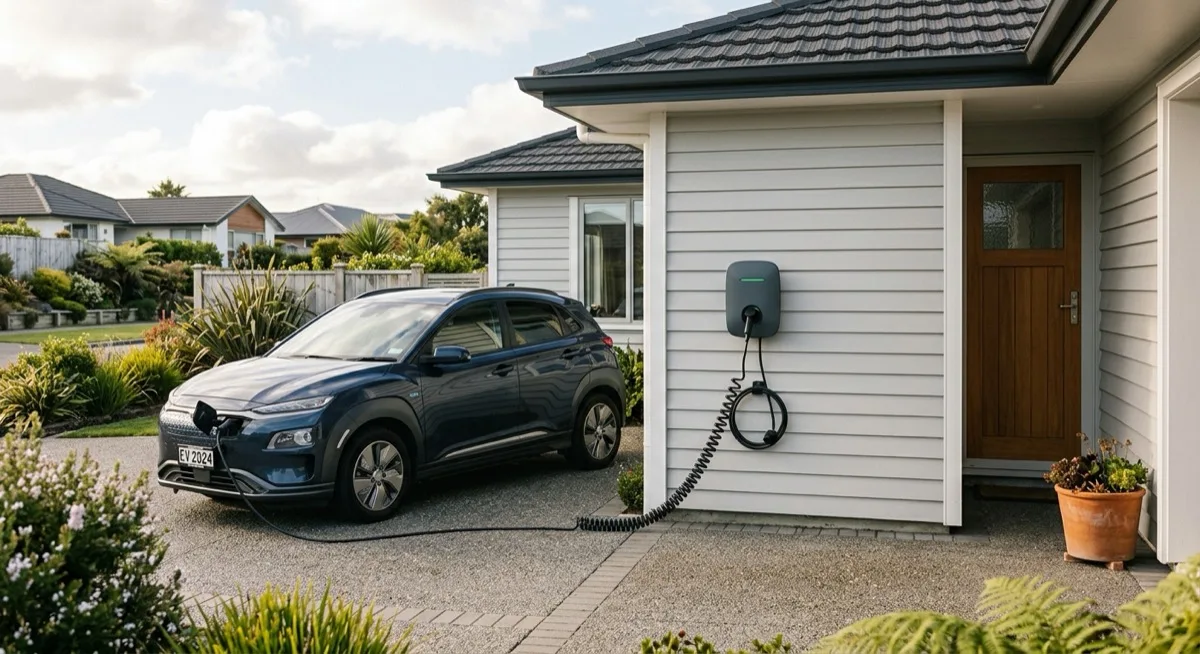
When choosing a home charger, it’s tempting to assume more power is better. For home charging in New Zealand, that’s usually not the case. Here’s how the common speeds compare and why 7kW suits most homes.
The short answer
- 7kW (single-phase): the right choice for the vast majority of NZ homes. Adds about 40km of range per hour, so most EVs recharge fully overnight.
- 11kW / 22kW (three-phase): faster, but they require three-phase supply and a car that accepts the rate. Most households don’t need them and many can’t use them.
Unless you have an unusually large battery, charge two EVs, or have a specific need for rapid top-ups at home, 7kW is plenty.
What the kW numbers actually mean
The kilowatt rating tells you how quickly the charger can put energy into the car, and that directly translates to how many kilometres of range you recover per hour. Here’s how the common home-charging options compare:
| Charger type | Power | Range per hour (approx.) | Supply required |
|---|---|---|---|
| 3-pin socket (trickle) | ~2.3kW | ~13–14 km/hr | Single-phase |
| Basic socket/16A outlet | ~3.6–3.7kW | ~20 km/hr | Single-phase |
| 7kW wallbox | 7kW | ~40 km/hr | Single-phase |
| 11kW wallbox | 11kW | ~60 km/hr | Three-phase |
| 22kW wallbox | 22kW | ~120 km/hr | Three-phase |
The range-per-hour figures are approximate; actual results vary with battery chemistry, temperature, and the car’s onboard charger limit. A 7kW wallbox fills a 60kWh battery from 20% to 100% in roughly eight to nine hours, which is overnight, comfortably.
7kW: the default for most NZ homes
A 7kW single-phase wallbox is the standard home EV charger in New Zealand, and for most households it’s the right call. Here’s why:
It works on the supply you already have. The vast majority of NZ homes are single-phase, which can safely support a 7kW dedicated charging circuit without any supply upgrade. Installed cost for a typical 7kW wall-mounted setup runs indicatively around $1,500–$2,500 all-in (hardware plus a Registered Electrician to install and issue a Certificate of Compliance), though the exact figure depends on switchboard capacity, cable distance, and parking location. See the full cost guide for a detailed breakdown.
It’s fast enough for almost everyone. New Zealand’s average daily driving distance is well under 50km. Even if you return home with a nearly depleted battery, a 7kW charger will restore a full charge overnight. The only scenario where 7kW genuinely falls short is if you regularly drive 200km+ in a day and need the car fully topped up by early morning, which describes very few drivers.
Charger hardware is widely available at 7kW. Well-regarded NZ brands like Evnex, Wallbox, and myenergi all offer proven 7kW units, with hardware typically in the $800–$2,000 range (hardware only, installation labour is separate).
11kW and 22kW: who actually benefits
Higher-power chargers are not a bad idea; they just suit a narrower set of situations. Two genuine use cases:
1. Large-battery EVs driven heavily. A vehicle with a 100kWh battery takes roughly 14 hours to charge from low on a 7kW charger. If you’re doing high-mileage days regularly, an 11kW charger cuts that to around nine hours, and 22kW to about four to five. For most NZ owners with 50–80kWh batteries and typical daily distances, this advantage never materialises in practice.
2. Households charging two EVs. If both cars share a single home charger and overnight time is tight, a higher-power unit (or two separate 7kW circuits) can help. Two 7kW circuits on a single-phase supply is often the more practical solution.
The three-phase requirement
11kW and 22kW chargers need three-phase supply. Many New Zealand homes, particularly older suburban properties and most homes outside central business districts, are single-phase only. If you don’t currently have three-phase power, adding it costs roughly $2,500–$4,500 for the electrician’s work — switchboard, consumer mains and labour — plus a lines-company charge quoted per property that can be the larger of the two. There is no honest national figure for that second part: Vector prices it per kVA of added capacity, while Orion publishes a flat per-premise connection price. Both sit on top of the charger hardware and installation. See why nobody can quote a three-phase price for how to get your own number.
Even if you do have three-phase supply, your car’s onboard AC charger caps the rate the car can actually accept. Many popular EVs in NZ max out at 7.4kW or 11kW AC, which means a 22kW charger delivers no speed benefit over a 7kW unit for those vehicles. Confirm your car’s maximum AC charge rate before specifying the charger. For a deeper look at the supply question, see single-phase vs three-phase EV charging.
The overnight charging argument
Home charging is fundamentally different from public fast charging. At a motorway DC rapid charger you want speed because you’re parked for 20 minutes. At home, the car is parked for eight to twelve hours regardless, so the question is rarely “can I charge fast enough?” and almost always “can I charge fully by morning?”
For a typical NZ household, daily driving is well under 50km. That consumes roughly 7–10kWh. A 7kW charger recovers that in under two hours. Even a full charge-from-low overnight scenario is comfortably completed with hours to spare.
The extra speed of 11kW or 22kW is simply unused time at home. It only matters if you have a specific reason to top up quickly during the day.
Cost implications
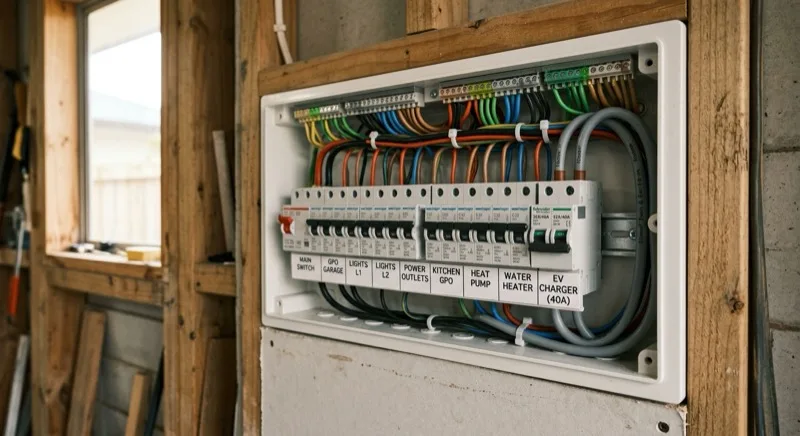
Charger choice affects the total installation cost in two ways: the hardware itself and what it demands from your switchboard and power supply.
- 7kW single-phase: indicatively $1,500–$2,500 installed (hardware $800–$2,000 + installation labour), assuming no switchboard work is needed. This is the common anchor range.
- 11kW/22kW on existing three-phase supply: indicatively $2,500–$5,000 installed, hardware is more expensive and installation more complex.
- Installing three-phase supply if you don’t have it: add $2,500–$4,500 for the electrician’s share, plus a lines-company charge quoted per property that can exceed it.
- Switchboard upgrade (if needed either way): add roughly $1,500–$3,000.
All figures are indicative; your actual cost depends on the specifics of your property. The EV charger installation cost guide explains every variable in detail.
Our recommendation
Start with 7kW unless you have a clear specific reason not to.
For the typical NZ household (single-phase supply, one EV, daily driving under 100km), a 7kW wallbox does everything a home charger needs to do. It costs less, works on the supply you have, and is compatible with virtually every EV sold in NZ.
If you’re genuinely considering 11kW or 22kW, first confirm:
- You have (or are prepared to pay to install) three-phase supply.
- Your car actually accepts 11kW or 22kW AC. Not all do.
- Your driving pattern genuinely can’t be met by overnight 7kW charging.
If all three are true, higher power makes sense. If any are false, you’d be paying for capability you can’t use.
A Registered Electrician can confirm your supply type and recommend the right charger for your situation before you commit to hardware. Getting the assessment as part of your quote request means one person is responsible for the whole job and the sign-off.
What to send for an accurate quote
The more detail you give an installer upfront, the less chance of surprises once work starts. Useful things to include:
- A photo of your switchboard (door open if safe). This lets the installer assess capacity and flag a likely upgrade early.
- A photo of your parking location: garage, carport, or driveway; covered or exposed.
- Approximate cable route from switchboard to the charger location: distance and any obstacles (solid walls, paving, long runs).
- Your EV make and model. This confirms the Type 2 socket standard and your car’s AC charge rate.
- Whether you have single-phase or three-phase supply. If you’re unsure, the electrician will confirm, but knowing in advance speeds things up.
- Any smart-charging preferences: scheduled charging, solar integration, load management.
Frequently asked questions
Is a 7kW or 22kW EV charger better for home?
For most NZ homes, 7kW is the sensible choice. A 7kW charger adds roughly 40km of range per hour, easily enough to fully recharge overnight. 22kW only helps if you have three-phase power, a car that accepts that rate, and a genuine need for very fast top-ups, which is rare for home charging.
How long does a 7kW charger take to charge an EV?
A 7kW charger adds about 40km of range per hour, so most EVs go from low to full overnight. The exact time depends on your battery size and how empty it is, but for daily driving you'll almost always wake up to a full charge.
Can I get 22kW charging at home in NZ?
Only if you have three-phase supply, which many NZ homes don't. You'd also need a car whose onboard AC charger accepts 22kW, and many cap AC charging at 7.4kW or 11kW, so a 22kW charger wouldn't charge any faster than a cheaper unit.
Will a faster charger damage my EV battery?
No. Home AC charging at 7kW–22kW is gentle on the battery. The fast DC charging at public stations is different, and even that is managed by the car. Choosing 7kW vs 22kW is about cost and supply, not battery health.
Can I upgrade from 7kW to 22kW later?
Yes, in principle, but you'd need three-phase supply installed and a new charger unit. It's rarely worthwhile unless your circumstances change (e.g. you buy a second EV with a large battery). Most installers recommend getting the right charger for your current situation rather than over-speccing.
Does a 7kW charger work with any EV?
Almost all modern EVs sold in NZ accept 7kW AC charging via a Type 2 connection. Older vehicles and some PHEVs have lower onboard charger limits (3.6kW or 3.7kW), in which case the 7kW charger will charge at that lower rate automatically. It won't damage anything, it just won't charge any faster than the car allows.