Charger guide
Single-phase vs three-phase power for EV charging
Most NZ homes are single-phase, and that's usually all you need for EV charging. Here's the difference, how to tell which you have, and when three-phase is worth it.
In short
No. Most NZ homes are single-phase, and a single-phase 7kW charger fully recharges almost any EV overnight (around 40km of range per hour). You only need three-phase for 11–22kW charging, which most households never require, and only if your car accepts three-phase AC too.
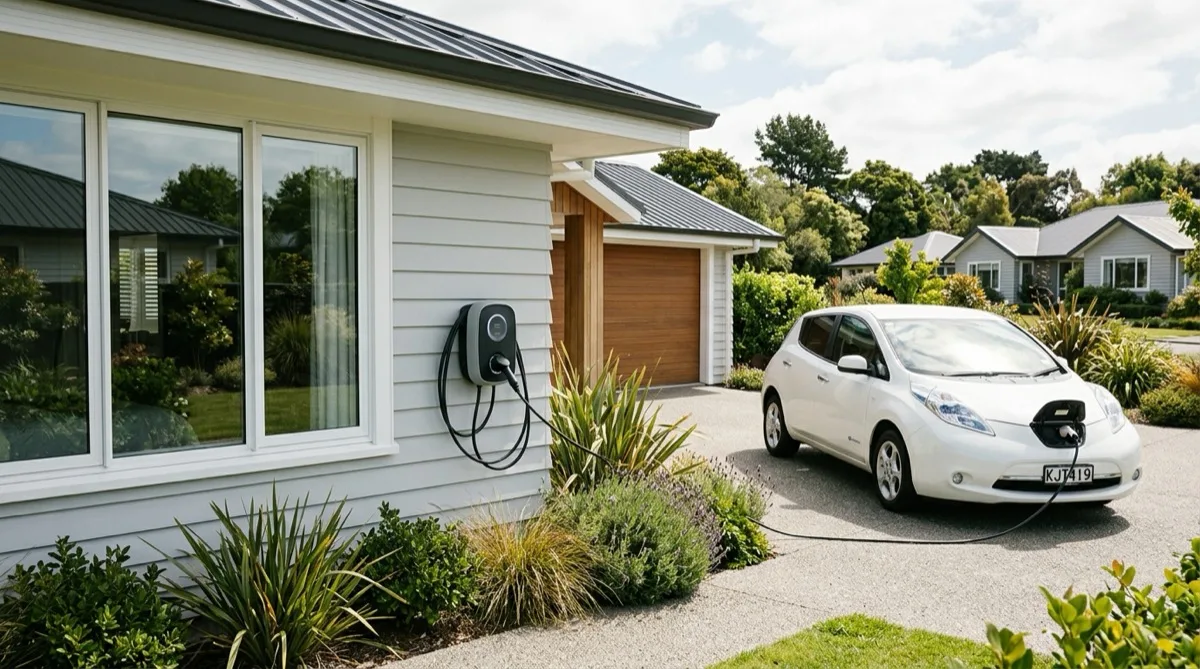
Power supply is one of the first things that affects which home charger suits you. The good news: most New Zealand homes are single-phase, and that’s usually all you need for EV charging.
The short answer
Single-phase 7kW is the right choice for most NZ homes. It adds around 40km of range per hour, which is more than enough to fully top up most EVs overnight. Three- phase supply unlocks faster 11kW or 22kW charging, but most households don’t need that speed. If you don’t already have three-phase supply, bringing it in is a significant cost that rarely makes sense for home charging alone.
A Registered Electrician will confirm which supply you have as part of any charger assessment. Don’t commit to a charger model until you know.
What single-phase and three-phase actually mean
NZ homes receive electricity from the network as either single-phase or three-phase supply. The difference is in how many live conductors run into your switchboard.
Single-phase supply has one live conductor. It delivers power at up to 7.4kW to a home EV charger (in practice, most 7kW wallboxes run at exactly that). This is the standard residential supply throughout New Zealand, and it is what the vast majority of NZ homes have.
Three-phase supply has three live conductors. It can deliver up to 22kW to a compatible home charger, typically 11kW or 22kW depending on the charger hardware and what your car’s onboard charger accepts. Three-phase supply is more common in commercial premises, industrial sites, and some newer or larger residential properties.
One important point often missed: even if you have three-phase supply, your car must also support three-phase AC input for you to benefit from faster charging. Many popular EVs, including certain Tesla models and older Nissan Leafs, only accept single-phase AC. Fitting an 11kW or 22kW charger to one of those cars would deliver no more speed than a 7kW unit. Check your vehicle’s onboard charger specification before choosing hardware.
What about the charging cable: single or three-phase?
The connector is the same either way. NZ home AC charging uses the Type 2 standard, and a Type 2 plug has the same shape whether the supply is single- or three-phase. The difference is in how many of the cable’s conductors carry power:
- A single-phase Type 2 cable carries power on one phase and is rated to around 7.4kW.
- A three-phase Type 2 cable uses all three phase conductors for up to 22kW, and it still works on a single-phase supply, simply drawing on one phase to deliver the same ~7.4kW.
This only matters if you choose an untethered (socketed) charger and supply your own cable. A tethered wallbox comes with the correct captive cable already fitted, so there is nothing to match. Either way, your actual charge speed is capped by the lowest of three things: your home’s supply, the charger’s rating, and your car’s onboard charger. See tethered vs untethered chargers for how the cable options compare.
How to tell which supply you have
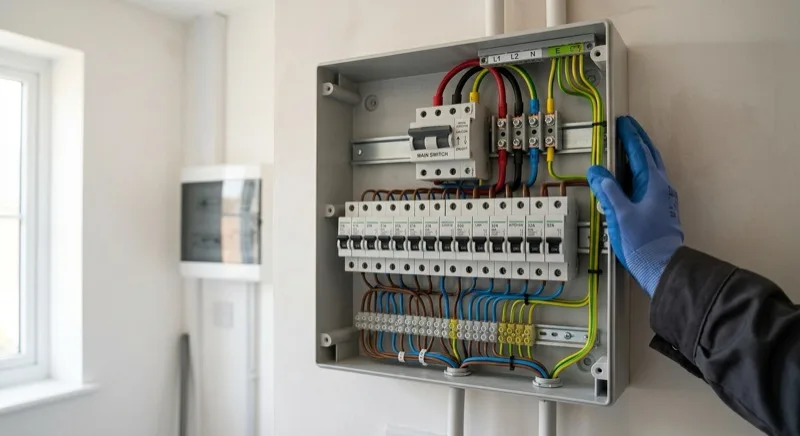
The most reliable way is to have a Registered Electrician confirm it. They check this as a standard part of any charger quote and can tell you in minutes.
If you want a rough indication before booking an assessment:
- Open your switchboard door carefully, and do not touch anything inside.
- Single-phase boards typically have a single main switch and a row of breakers.
- Three-phase boards have a larger main switch and you may see three incoming live conductors or a three-pole main breaker.
This visual check gives you a starting point, but it is not definitive. Switchboard configurations vary and can be misleading. Do not assume, and do not choose a charger based on a self-assessment alone. If you’re requesting a quote, send a clear photo of your open switchboard and a good installer can often confirm the supply type from the photo before they even visit.
Why most homes only need single-phase
For overnight home charging, 7kW is almost always enough. Here is the practical arithmetic:
- A 7kW charger adds roughly 40km of range per hour of charging.
- The average NZ driver travels around 30–40km per day.
- Even if you arrive home with a nearly empty battery, plugging in at 6pm and unplugging at 7am gives you up to 13 hours of charging, more than enough to refill any common EV.
The only scenario where 7kW starts to feel limiting is if you regularly drive very high daily distances and need a rapid top-up rather than an overnight charge. For the overwhelming majority of NZ households, single-phase 7kW removes that concern entirely.
A standard 7kW single-phase installation typically comes to around $1,500–$2,500 all-in (hardware plus a Registered Electrician’s labour and Certificate of Compliance). See the full cost guide for what drives price up or down.
When three-phase is genuinely worth considering
Three-phase charging makes sense in a narrower set of circumstances:
You already have three-phase supply. If three-phase is already present at your switchboard (common in some newer homes, lifestyle blocks, or properties with large workshops), then stepping up to an 11kW or 22kW charger is relatively straightforward, provided your car accepts that rate. In this case, the upgrade is mostly about choosing the right hardware rather than a major electrical project.
You are charging two EVs from one point. A single 7kW charger shared between two vehicles can mean longer wait times. Some households in this position find an 11kW or 22kW charger more practical, or use a dual-socket solution. If your property already has three-phase, this is worth discussing with your installer.
Your EV has an unusually large battery and you need fast daily top-ups. Most EVs with 60kWh+ batteries still charge fine on single-phase overnight, but if your use pattern involves frequent deep-discharge cycles and early-morning departures, a faster charger may suit you.
You are doing broader electrical work that makes the upgrade cost-effective. If you are already planning a full switchboard replacement or major renovation work that would bring an electrician on-site for an extended period, the incremental cost of adding three-phase supply is lower than doing it as a standalone job.
Outside these scenarios, three-phase is unlikely to improve your charging experience enough to justify the additional cost.
What upgrading to three-phase involves, and what it costs
If your home currently has single-phase supply and you want to bring in three-phase, this is a significant electrical project. It is not simply an internal rewiring job.
In most cases, upgrading to three-phase supply requires:
- Your lines company to upgrade the connection at the street or pole, which is governed by their own processes and timelines and may involve a connection fee that sits outside the electrician’s quote.
- A new or upgraded switchboard to accept three-phase incoming supply.
- A Registered Electrician to manage and certify the complete work, with a Certificate of Compliance issued on completion.
Installing three-phase supply where it does not already exist splits into two very different costs. The electrician’s share — switchboard, consumer mains and labour — runs roughly $2,500–$4,500. Your lines company then quotes its own share per property, and that can be the larger of the two: Vector charges a $300 assessment fee plus $264.50 per kVA of added capacity plus a per-job connection fee, while Orion publishes a flat $4,700 for an urban three-phase connection and $9,000 rural. Because the networks do not price it in the same units, no single national figure is honest — see why nobody can quote a three-phase price. All of that comes before the charger hardware, which is why three-phase is rarely justified purely to charge faster at home.
If your switchboard also needs upgrading as part of any installation (three-phase or not), that is a separate cost driver. Read the switchboard upgrade guide to understand what triggers one and what to budget for.
Our recommendation for most NZ homes
Unless you already have three-phase supply, go with a single-phase 7kW wallbox. It will cover overnight charging for the vast majority of New Zealand driving patterns, it is the most cost-effective option, and every competent EV charger installer can quote and fit it without additional supply work.
If you are unsure which applies to your property, or you want to explore whether three-phase makes sense for your situation, the right next step is to get a quote from a Registered Electrician who will assess your supply and switchboard as part of the process.
See 7kW vs 22kW charger speeds for a deeper look at the speed trade-off, and the cost guide for what the full installation is likely to cost at your property.
What to send for an accurate quote
When you request a quote, include the following so your installer can assess your supply and provide a reliable price:
- A photo of your open switchboard: this lets the installer check your supply type and whether the board has capacity for a new dedicated circuit
- Your parking or garage location: a photo or description of where the charger would be mounted, relative to the switchboard
- Your EV make and model: the installer can confirm the correct connector type and maximum AC charge rate your car accepts
- Your preferred charger brand (if you have one), or ask for a recommendation
- An approximate cable route: rough distance between switchboard and parking, and whether the run is through a garage wall, under the eaves, or outdoors
- Any relevant context: such as whether you rent, own a unit title property, or have had switchboard work done recently
Frequently asked questions
How do I know if my home is single-phase or three-phase?
A Registered Electrician can confirm it in minutes, and it's often visible at the switchboard, where three-phase supply typically shows a larger main switch and three live conductors rather than one. Most NZ homes are single-phase. If you're requesting a quote, an electrician will check this as part of the assessment.
Do I need three-phase power to charge an EV at home?
No. Single-phase supply comfortably runs a 7kW charger, which adds about 40km of range per hour and fully recharges most EVs overnight. Three-phase is only needed for 11kW or 22kW charging, which most households don't require.
How much does it cost to upgrade to three-phase?
Converting a single-phase home to three-phase can be a significant job. It may involve the lines company and a new supply, not just internal wiring, so it's rarely worth it purely for faster charging. A Registered Electrician can quote your specific situation. For most homes, sticking with single-phase 7kW is the practical choice.
Can my EV even use three-phase charging at home?
Only if your car's onboard charger accepts three-phase AC input. Many popular EVs in NZ, including some Tesla models and older Nissan Leafs, only accept single-phase AC, so fitting a three-phase wallbox would make no difference to charge speed. Check your vehicle's spec sheet before assuming three-phase will help.
Do I need a single-phase or three-phase Type 2 charging cable?
This only comes up if you choose an untethered (socketed) charger and supply your own cable. NZ home charging uses the Type 2 connector, which is the same shape either way. A single-phase Type 2 cable carries up to about 7.4kW; a three-phase Type 2 cable uses all its conductors for up to 22kW and still works fine on single-phase supply, drawing on one phase for the same ~7.4kW. A tethered wallbox comes with the correct captive cable already fitted, so there's nothing to choose. Your real charge speed is capped by the lowest of three things: your supply, the charger's rating, and your car's onboard charger.
Will a 7kW single-phase charger fully charge my EV overnight?
Yes, for the vast majority of NZ drivers. A 7kW charger adds roughly 40km of range per hour. Most EVs have 40–100kWh batteries; even a 100kWh battery starting at 20% charge would be full in around 10 hours. Plugging in when you get home and unplugging in the morning is all most households ever need.
Does single-phase vs three-phase affect the cost of installation?
Yes. A standard single-phase 7kW installation typically comes to around $1,500–$2,500 all-in. Three-phase installations (where the supply already exists) tend to be higher due to the more capable hardware and additional wiring requirements. If three-phase supply needs to be brought in from scratch, that can add thousands on top. See the cost guide for ranges.