Comparison
Tethered vs untethered EV charger: which should you get?
Tethered chargers have the cable attached for plug-and-go convenience; untethered take your own cable and stay tidier and more future-proof. Here's how to choose for your NZ home.
Once you’ve settled on a 7kW wall charger, there’s one more decision the showroom asks that trips people up: tethered or untethered? It’s a small choice with no wrong answer, but the right one makes daily charging that bit nicer. Here’s the difference and how to pick.
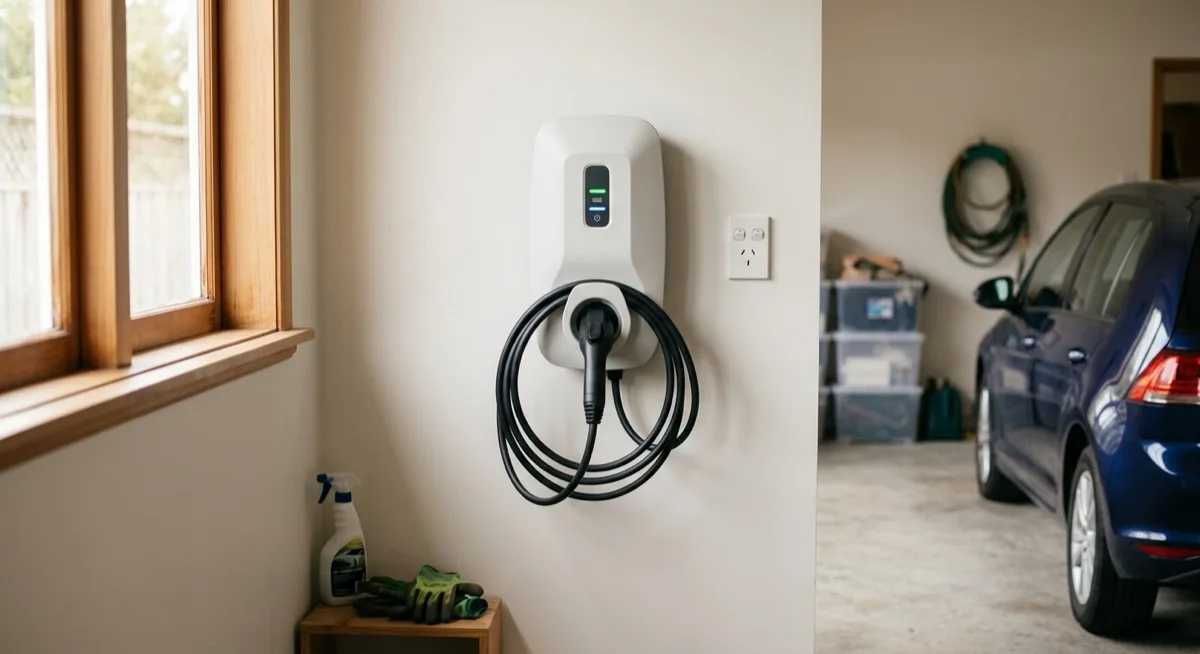
The difference in one line
- Tethered: the cable is attached to the wall unit. Pull it out, plug into the car, done. Like a petrol pump.
- Untethered (also called socketed): the wall unit has a Type 2 socket; you plug your own portable cable in each time and store it when you’re finished.
Both charge at the same speed, install the same way, and cost about the same. The choice is purely about how you want to live with it day to day.
Side by side
| Tethered | Untethered | |
|---|---|---|
| Cable | Attached to the unit | You supply / store your own |
| Daily convenience | Higher, plug-and-go | Slightly more handling |
| Tidiness | Cable lives outside | Nothing left out |
| Weather / theft exposure | Cable always outdoors | Cable stored inside |
| Future-proofing | Fixed cable length & connector | Swap cable for any car/length |
| Best for | One EV, charged daily | Shared, exposed or future-flexible setups |
When tethered is the better choice
Pick tethered if you want the least friction. For a single household EV you charge every night, having the cable always there (no fetching it from the boot, no plugging two ends in) is genuinely more pleasant. It’s the popular choice for garages and carports where the unit sits right by the car and the cable is sheltered anyway.
The trade-offs are minor: the cable length is fixed (commonly ~5m), so the unit needs to be mounted within reach of your park, and the cable lives outdoors on the unit.
When untethered is the better choice
Pick untethered if you value tidiness, flexibility or security:
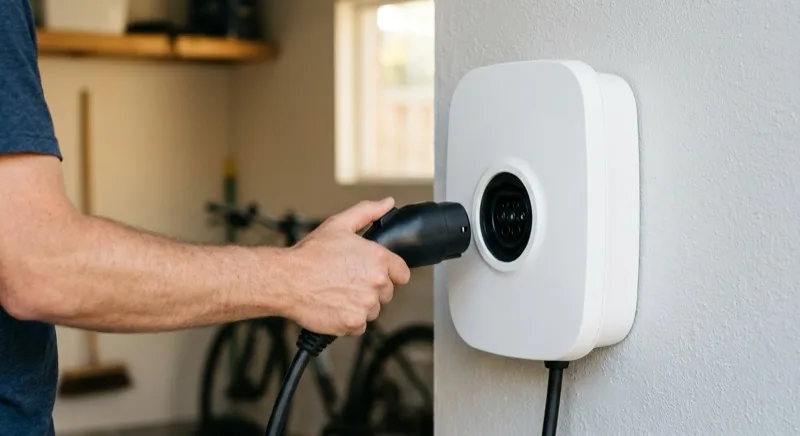
- Exposed or street-facing installs: with nothing left out, there’s no cable exposed to weather or to walk off with. You store it inside.
- Changing cars or sharing: any EV with its own Type 2 cable can use it, and you can choose a longer cable if your park is further away.
- A cleaner look: just a neat wall unit when it’s not in use.
The trade-off is a little more handling each time: you fetch the cable, plug both ends, and store it afterwards.
What it doesn’t change
Two things people worry about that don’t differ between the two:
- Speed. Both deliver your charger’s full rate (typically 7kW, ~40km of range per hour). The cable, not the tether style, sets the limit, so match an untethered cable’s rating to your charger (e.g. 32A for 7kW).
- Cost. Hardware is similar (a tethered unit bundles the cable; untethered you supply your own), and the install labour is identical. A typical 7kW install is around $1,500–$2,500 either way; the cable run and switchboard move the price far more than this choice does.
Note this is a different question from portable vs wall-mounted: that’s about a plug-in trickle cable versus a fixed wallbox. Tethered vs untethered is a choice within fixed wallboxes.
The bottom line
For most one-EV homes with a garage or carport, tethered is the easy, convenient default. If your install is exposed, shared, or you want to stay flexible for future cars, untethered is the tidier, more future-proof pick. Either way the charger, the speed and the install are the same.
Not sure which charger to put it on? The charger chooser covers speed, connector and smart features together, and the best EV charger guide compares the brands. When you’re ready, get free quotes and mention your parking setup, and your installer will recommend a position and cable length that works.
Frequently asked questions
What's the difference between a tethered and untethered EV charger?
A tethered charger has the charging cable permanently attached to the wall unit, and you pull it out and plug straight into the car. An untethered (or 'socketed') charger is just the wall unit with a Type 2 socket; you plug your own portable cable in each time. Both deliver the same charging speed and install the same way. The difference is convenience versus tidiness and flexibility.
Is a tethered or untethered charger better?
Neither is better outright. Tethered is more convenient for a single EV you charge daily, with no cable to fetch and store. Untethered is tidier, less exposed to weather and theft, and more future-proof if you change cars or need a different cable length. For most one-EV households a tethered unit is the easier day-to-day choice; untethered suits shared, exposed or future-flexible setups.
Does tethered or untethered affect charging speed or cost?
No. Both charge at the same speed (typically 7kW) and cost about the same to install. The hardware price is similar; a tethered unit includes the cable while with untethered you supply your own. Installation labour is the same either way, so a typical 7kW install still runs around $1,500–$2,500 whichever you choose.
Can I use any cable with an untethered charger?
You use a standard Type 2 to Type 2 charging cable, which most EVs come with or which is widely available. Match the cable's current rating to your charger (e.g. 32A for 7kW) so it can carry the full charging speed. The same Type 2 standard is used across virtually all EVs sold in NZ.
Is a tethered cable long enough to reach my car?
Tethered cables are commonly around 5 metres, which suits most garages and carports where the charger is mounted near the parking spot. If your park is further from where the charger can be mounted, mention it when you get a quote, and your installer can position the unit accordingly, or an untethered setup with a longer cable may suit better.
Which is more secure against theft or weather?
Untethered has a slight edge: with no cable left out, there's nothing exposed to weather or to walk off with, so you store the cable inside. A tethered cable lives outdoors on the unit, though most are weather-rated and many people simply coil them on the charger's holster. For exposed or street-facing installs, untethered can be the tidier, lower-worry option.