Comparison
The best home EV charger for NZ homes: by what you actually need
No charger wins outright — 7kW units run about $900–$1,600 and the right pick depends on your supply, your power plan and whether you have solar. Evnex, Tesla, Zappi, Wallbox and EO compared on speed, smarts and local support.
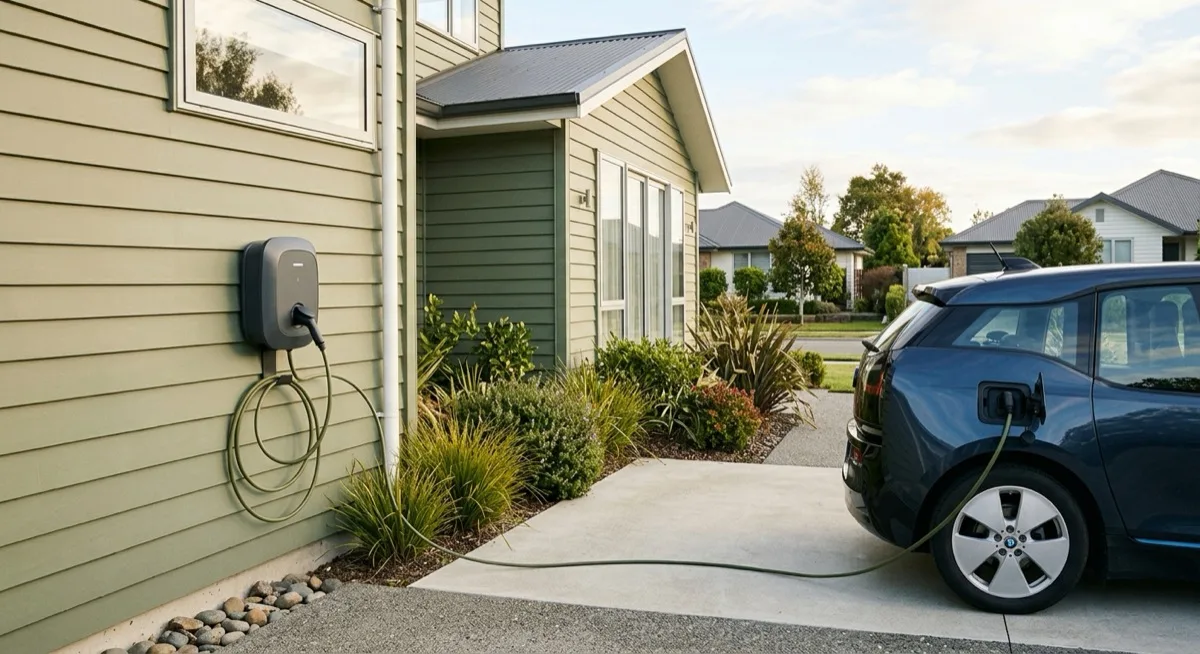
“What’s the best EV charger?” is the most common question before a home install, and the honest answer is that there isn’t one. The right charger depends on your power supply, whether you’ll charge on an off-peak plan, whether you have solar, and which EV you drive. Get those four things straight and the choice almost makes itself.
This guide compares the brands commonly sold in New Zealand by the situations they suit, so you can shortlist before you talk to an installer. It’s a buyer’s guide, not a lab test. We don’t rank chargers with star ratings, because the “best” unit genuinely changes from home to home.
The short answer
For the typical NZ home (single-phase supply, one EV, off-street parking) the best charger is a 7kW single-phase smart charger from a brand with solid local support. Several units fit that description well; the differences come down to use-case:
- Best all-round for most homes: Evnex (NZ-designed and supported) or the Tesla Wall Connector (excellent value, works with any EV, not just Teslas).
- Best if you have solar: myenergi Zappi, which can divert surplus solar into the car instead of exporting it cheaply.
- Best for Tesla owners: the Tesla Wall Connector, which pairs neatly with the car and app (though it charges any Type 2 EV).
- Best for flexible smart control: Wallbox or EO, both app-controlled with good scheduling.
- For three-phase homes: ABB, Schneider EVlink and Delta all offer robust 11–22kW units, alongside three-phase versions of the brands above.
If you’d rather be walked through it, the EV charger chooser turns these same questions into a starting recommendation in about a minute.
Decide these four things first
The brand matters less than getting these right. Settle them and the shortlist narrows itself.
1. Charging speed: almost always 7kW. A 7kW single-phase charger adds about 40km of range per hour, which fully recharges almost any EV overnight. Faster 11kW/22kW charging needs three-phase supply (uncommon in NZ homes) and an EV whose onboard charger accepts it; most cap at 7.4kW or 11kW AC. See 7kW vs 22kW and single-phase vs three-phase for the full picture.
2. Smart or basic. A smart charger schedules charging into a cheap off-peak window and is controlled from an app. With time-of-use power plans now the norm, smart is the sensible default: the saving on running cost outweighs the small extra hardware cost.
3. Tethered or untethered. Tethered means the cable is attached (plug-and-go); untethered is a socket you plug your own cable into (tidier, future-proof across cars). Both install the same way. See tethered vs untethered.
4. Solar or not. If you have (or plan) rooftop solar, a solar-diverting charger earns its place by charging from surplus generation. If you don’t, you can ignore that feature entirely. See charging your EV from solar.
The main brands, by who they suit
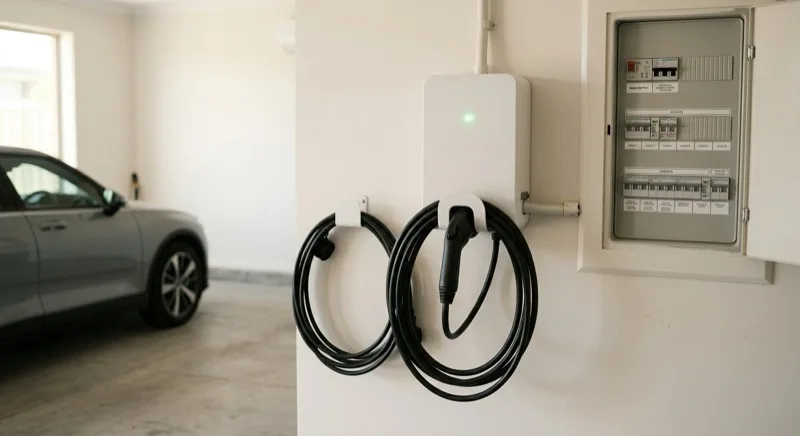
Every brand below installs on a standard NZ single-phase supply (with three-phase versions where noted), uses the Type 2 connector, and must be fitted by a Registered Electrician with a Certificate of Compliance. Hardware prices are indicative for a 7kW unit; the install is separate.
| Charger | Best for | Smart features | Solar diversion |
|---|---|---|---|
| Evnex | NZ-designed, local support | Yes, app + scheduling | Via load management |
| Tesla Wall Connector | Tesla owners + best value | Yes, via Tesla app | No |
| myenergi Zappi | Homes with solar | Yes, app + eco modes | Yes, native |
| Wallbox | Flexible app control | Yes, Pulsar app | Some models |
| EO Charging | Compact, tidy installs | Yes, app | Some models |
| Schneider EVlink | Three-phase / brand-matched boards | Yes | Model-dependent |
| ABB / Delta | Three-phase, robust hardware | Yes | Model-dependent |
The smart and solar columns are general guidance; exact features vary by model and firmware, so confirm the specific unit with your installer.
Evnex: the local all-rounder
Evnex is designed in New Zealand for local conditions, with support based here. For many homeowners that’s the deciding factor: firmware, warranty and parts are handled domestically rather than through an overseas chain. It’s a strong default for a typical 7kW single-phase home and a safe pick if you value local backing.
Tesla Wall Connector: value that isn’t just for Teslas
The Tesla Wall Connector is keenly priced and well built, and a common myth is that it only charges Teslas. It uses the standard Type 2 connector, so it charges any modern EV. If you own a Tesla it integrates neatly with the car and app; if you don’t, it’s still excellent value. The main trade-off is that it lacks native solar diversion.
myenergi Zappi: the solar pick
If you have rooftop solar, the Zappi is the standout: its “eco” modes can charge the car from surplus solar rather than exporting it cheaply, which shortens your solar payback. Without solar, much of what you pay for goes unused, so it earns its premium specifically when there are panels on the roof. See EV charger with solar.
Wallbox and EO: flexible smart control
Wallbox and EO are both compact, app-controlled units with good scheduling, popular where homeowners want tidy hardware and flexible control without tying into one car brand’s ecosystem.
Schneider, ABB and Delta: three-phase and robustness
Schneider EVlink, ABB and Delta are most often specified where a home has three-phase supply and wants 11–22kW charging, or where matching the existing switchboard brand is preferred. For a standard single-phase home they’re capable but rarely necessary over the lighter consumer brands.
What actually changes the price
Choosing between these brands moves the hardware cost by a few hundred dollars, roughly $900–$1,600 for a 7kW unit. What moves the total far more is the install itself:
- A typical 7kW install runs around $1,500–$2,500 all-in whatever brand you choose.
- A long cable run from switchboard to parking, or a switchboard upgrade, is the main reason a quote comes in higher, far more than the brand.
So pick the charger that fits your situation, then let the installer quote the job. The cost guide breaks down every variable, and the running-cost calculator shows what charging actually costs once it’s in.
Our recommendation
For most NZ homes: a 7kW single-phase smart charger from Evnex or Tesla, on an off-peak power plan. Add solar diversion (Zappi) only if you have panels, and step up to three-phase hardware (ABB / Schneider / Delta) only if you actually have three-phase supply and a need for faster charging.
Still weighing it up? Run the charger chooser for a recommendation based on your car and supply, or compare the two most-asked-about units head to head in Tesla Wall Connector vs Evnex. When you’re ready, get free quotes and local installers will price your actual setup, including the brand you’ve chosen.
Frequently asked questions
What is the best home EV charger in NZ?
There isn't a single best charger. It depends on your home. For most NZ homes a 7kW single-phase smart charger from a well-supported brand (Evnex, Tesla, Wallbox, myenergi/Zappi or EO) is the right call. If you have solar, a solar-diverting charger like the Zappi stands out; if you drive a Tesla, the Tesla Wall Connector is the natural fit. Match the charger to your supply, your power plan and whether you have solar rather than chasing a headline 'best'.
Which EV charger brands are sold in New Zealand?
The commonly installed home charger brands in NZ include Evnex (NZ-designed), Tesla (Wall Connector), Wallbox, myenergi (Zappi), EO Charging, Schneider Electric (EVlink), ABB and Delta. Most are 7kW single-phase units suited to typical NZ homes, with three-phase 11–22kW versions available for homes that have three-phase supply.
Is an NZ-designed charger better than an imported one?
Not automatically, but local design and support help. Evnex is designed in New Zealand for NZ conditions and grid, with local support, which can matter for firmware, warranty and parts. Imported brands like Tesla, Wallbox and myenergi are widely installed here too and well supported through local distributors. Parts availability and local support are worth checking whichever brand you choose.
Do I need a smart charger or will a basic one do?
If you'll charge on an off-peak or EV power plan, or you have solar, a smart charger pays for itself by shifting charging into the cheap window or matching it to surplus solar. Off-peak scheduling is the single biggest lever on running cost. If neither applies, a basic charger is fine, but smart usually costs only a little more and future-proofs you for time-of-use plans.
Does the charger brand affect installation cost?
The hardware price varies by brand and features (roughly $900–$1,600 for a 7kW unit), but the installation labour is broadly similar whatever brand you pick. A typical 7kW install runs around $1,500–$2,500 all-in. A long cable run or a switchboard upgrade affects the price far more than the choice of brand.
Will any charger work with my EV?
Almost all EVs sold in NZ use the Type 2 connector for AC home charging, so any mainstream Type 2 wallbox will work with virtually any modern EV regardless of car brand. A Tesla Wall Connector charges a non-Tesla, and an Evnex or Zappi charges a Tesla. The car's onboard charger sets the maximum speed (commonly 7.4kW or 11kW AC), not the brand of the wallbox.