Charger guide
Charging your EV from home solar in New Zealand
How solar-diverting EV chargers work in NZ, which chargers do it (Zappi, Evnex E2, Wattpilot), and whether the economics stack up for your home.
If you have rooftop solar, or you’re planning it, charging your EV from your own panels is one of the cheapest ways to run an electric car. But it only works with the right charger and the right setup, and the economics are better for some households than others. Here’s how solar charging actually works in New Zealand and how to tell whether it’s worth it for you.
The short answer
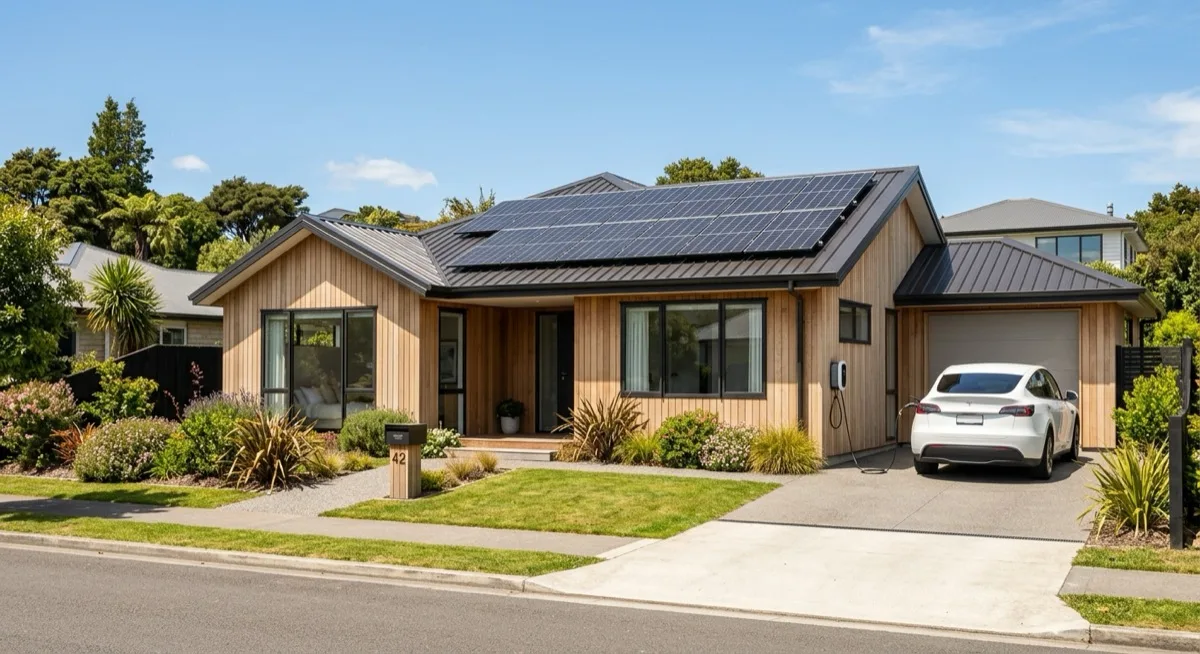
Yes, you can charge your EV from home solar. You need a solar-diverting charger (a unit that can sense surplus generation and follow it) and a compatible solar system with a way to measure that surplus. The value is highest if you’re home during the day or can leave the car plugged in while the sun is up, because diversion can only use solar while it’s actually being generated.
If you mostly plug in after dark, solar diversion does little for you. An off-peak charging schedule will save you more. Many households end up using both: solar during the day when they can, and a cheap overnight rate otherwise. See the smart charger guide and EV power plans for the scheduling side, and the home EV charging guide for how home charging works day to day.
How solar diversion actually works
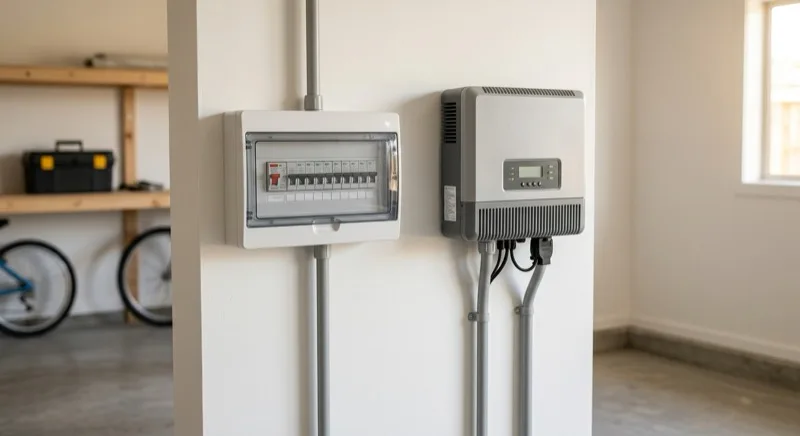
A solar-diverting charger watches the flow of power at your switchboard. Using a CT clamp (a current sensor) or an energy meter, it measures how much solar your panels are generating versus how much the house is using. The difference, the surplus that would otherwise be exported to the grid, is what it can send to the car.
Because the surplus changes minute to minute as clouds pass and household appliances switch on and off, the charger continuously throttles its draw up and down to match. On single-phase supply the practical minimum charging rate is around 1.4kW. The EV charging standard won’t go below about 6A (≈1.4kW at 230V), so the charger can’t deliver less than that without stopping (myenergi zappi solar charging, Spirit Energy, verified June 2026). So below about 1.4kW of available surplus, pure solar charging pauses; above it, the charger ramps up toward its maximum as more solar becomes available.
This is the same solar-integration capability covered in our smart charger guide. Here we go a level deeper on the chargers and the economics.
The three charging modes
Solar-diverting chargers typically offer a few modes. The names vary by brand, but the logic is generally:
- Surplus-only (often called “eco+” or similar): the charger uses only spare solar. If a cloud cuts generation below the 1.4kW floor, charging pauses and resumes when the sun returns. Cheapest per kWh, slowest, and the charge finishes whenever it finishes.
- Blended (“eco”): the charger always charges at the minimum rate, topping up with grid power when solar is short and ramping higher when there’s surplus. A compromise between speed and cost.
- Fast / boost: the charger ignores solar and charges at full rate from the grid, for when you need the car ready by a deadline regardless of cost.
The point of the surplus-only and blended modes is to lean on free solar as much as your day allows, while keeping a fast option for when you’re in a hurry.
Which chargers do solar diversion in NZ
Several solar-diverting chargers are sold in New Zealand:
- myenergi Zappi: a widely known solar-diverting charger available in NZ (myenergi NZ). Offers surplus-only and blended eco modes plus a fast mode. Verified June 2026.
- Evnex E2: a New Zealand-designed smart charger with solar and dynamic load management (Evnex). Verified June 2026.
- Fronius Wattpilot: a solar-diverting charger from inverter maker Fronius, a natural pairing if you already run a Fronius solar inverter. Verified June 2026.
We don’t quote hardware prices here because they move and vary by model and retailer. Check current pricing with the retailer or installer, and confirm the unit suits your power supply and solar inverter before you commit. Use the charger chooser to narrow the field by feature.
The economics: why self-consuming beats exporting
The financial case for solar diversion rests on one gap: in New Zealand, the retail price you pay for a unit of grid electricity is meaningfully higher than the buy-back rate (feed-in tariff) your retailer pays you for solar you export. As an indicative guide, NZ households pay roughly 35–42c/kWh to buy grid power but receive only about 7–17c/kWh for what they export, so self-consumption is worth several times more than exporting (Solar buy-back rates NZ, SolarScout, indicative rates, May 2026). Every kWh you self-consume, by putting it into the car instead of selling it to the grid, is worth more to you than exporting it.
Put simply: diverting solar into your EV avoids buying that energy from the grid at the full retail rate, while the alternative only earns you the lower export rate. The bigger that gap, the more solar charging is worth.
It pays off best when:
- You have a reasonably sized PV system that regularly produces surplus during the day.
- The car is home and plugged in during daylight. A second car, a work-from-home household, or weekend charging all help.
- Your retail rate is high and your buy-back rate is low, widening the gap.
It does little when:
- You only charge overnight. There’s no solar then, so an off-peak plan is the better lever.
- Your PV system is small and the house already consumes most of what it generates, so there’s rarely surplus to divert.
- The car is rarely home during the day.
Do you need a battery? Single vs three-phase?
You do not need a home battery for solar diversion. The charger sends surplus straight to the car in real time as it’s generated, so the EV effectively becomes a large, mobile place to store that energy. A home battery and an EV is a valid combination, but it changes the calculus: you (and your installer) decide whether daytime surplus should charge the house battery or the car first, based on your priorities. Sending energy the other way, from the car back into the house, is a separate, still-emerging capability. See vehicle-to-grid and vehicle-to-home in NZ for where that stands.
Supply phase matters too. On single-phase, the 1.4kW floor described above applies. On three-phase supply the dynamics differ and minimum/maximum rates change, which can affect how finely the charger follows small amounts of surplus. It’s worth discussing with your installer if you have three-phase. For the basics of supply, see the installation guide.
Inverter compatibility is the catch. Not every charger talks to every inverter brand, and some pairings need a specific energy meter or CT clamp fitted at the switchboard. Ask a Registered Electrician to confirm your chosen charger works with your existing solar inverter before you buy the hardware. Getting this wrong is the most common reason a solar charger underdelivers.
Is it worth it?
Honestly: it depends on your day, not just your panels. If you have solar, a car that spends daylight hours at home, and a decent gap between your retail and buy-back rates, a solar-diverting charger can shave a real amount off your running costs and is worth the modest premium over a basic smart charger. If you charge overnight, have a small array, or the car is always out during the day, an off-peak power plan will save you more for less hassle.
For many NZ households the best answer is a charger that does both: solar diversion when the sun’s out and the car’s home, and scheduled off-peak charging the rest of the time. That combination captures cheap solar without leaving you stuck when you need a fast top-up.
The simplest way to get this right is to tell an installer your setup (solar yes/no, inverter brand, supply phase, and when the car is usually home) and let them spec a compatible charger.
Request a quote from a local installer and mention your solar setup so they can recommend a charger that works with your panels.
Frequently asked questions
Can I charge my EV from solar panels in NZ?
Yes. With a solar-diverting EV charger and a compatible solar system, you can direct surplus solar generation into your car instead of exporting it to the grid. It works best if you're home during the day or can leave the car plugged in for several hours while the sun is up. It does little if you only ever charge overnight.
What is solar diversion / PV diversion?
Solar diversion (also called PV diversion or solar integration) is a charger feature that uses surplus solar generation (power your panels are producing but the house isn't using) to charge your EV rather than export it. A CT clamp or energy meter measures the surplus, and the charger throttles its draw up and down to match. On single-phase supply the practical minimum is around 1.4kW, set by the car's onboard charger.
Which EV chargers support solar charging in NZ?
Solar-diverting chargers sold in New Zealand include the myenergi Zappi, the Evnex E2, and the Fronius Wattpilot. Each measures household surplus and adjusts its charge rate to follow it. Not every charger works with every inverter brand, so confirm compatibility with your installer and check current pricing with the retailer or installer.
Do I need a home battery to charge my EV from solar?
No. Solar diversion works without a home battery. The charger sends surplus solar straight to the car in real time as it's generated. A battery changes the calculation: with both a battery and an EV, you decide whether surplus charges the house battery or the car first, which is a setup and priority question your installer can help configure.
Is solar EV charging worth it in New Zealand?
It depends on your setup. The value comes from the gap between the retail price you pay for grid power and the lower buy-back rate retailers pay for exported solar, because self-consuming your solar is worth more than exporting it. It pays off best with a reasonably sized PV system and a car that's home and plugged in during daylight. It adds little if you mostly charge at night or have a small array.