Charger guide
Vehicle-to-grid in NZ: can your EV power your house yet?
Bidirectional charging in New Zealand explained: V2L, V2H and V2G, what each needs, and the honest state of play for home buyers in 2026.
“Bidirectional charging,” the idea that your EV could power your house or sell energy back to the grid, gets a lot of attention. It’s a genuinely exciting direction. But for New Zealand home buyers in 2026 it’s mostly still emerging technology, not a product you can buy off the shelf. This guide explains the three terms you’ll hear, what each one actually needs, and where things honestly stand here.
The short answer
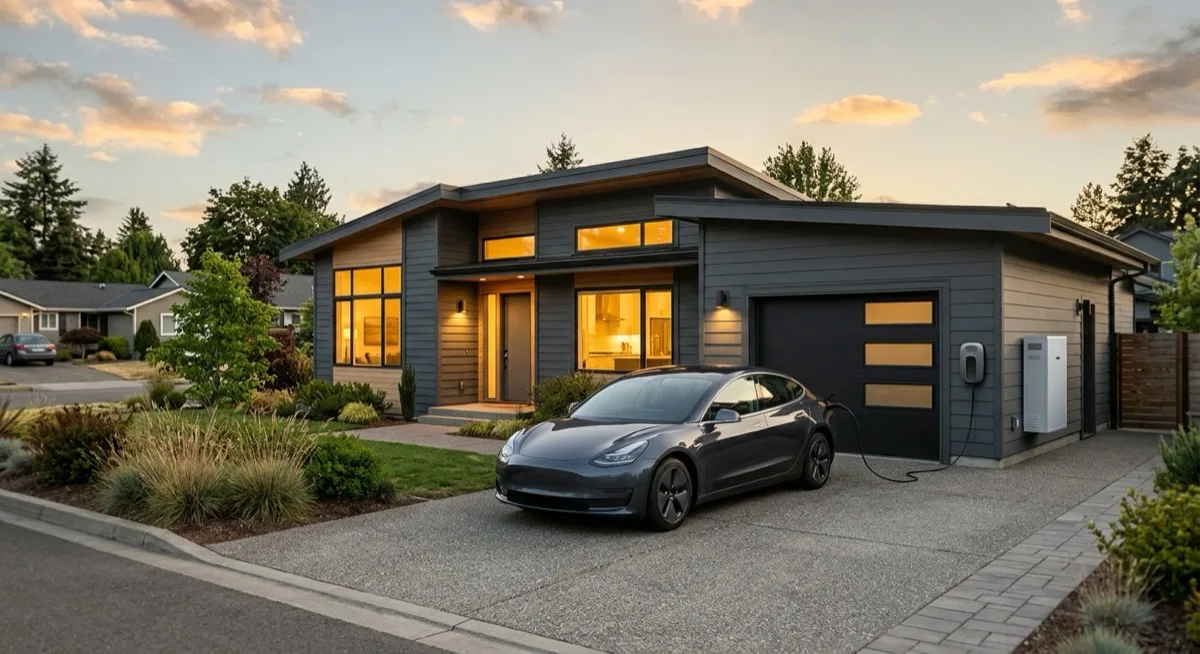
For most NZ households today, your EV cannot power your house in any meaningful way yet. The exception is vehicle-to-load (V2L): some EVs sold here can run an appliance or device from a socket, and that works now. Vehicle-to-home (V2H), which powers your house, and vehicle-to-grid (V2G), which exports to the grid, are both emerging. They need compatible hardware that is barely available here, and V2G also needs retailer and grid frameworks that are still being worked out (Source) (verified June 2026).
So: V2L works on some cars today; V2H and V2G are coming, but not a buy-it-today home product. Get a good smart charger now and keep an eye on the bidirectional space.
The one bidirectional decision you make today. Whatever V2H and V2G turn into, the constraint at your end is the switchboard: spare capacity and a modern board are what a future bidirectional install would need, and both are far cheaper to sort while an electrician already has the board open. If you’re installing a charger now, get free quotes and say you want bidirectional headroom taken into account — a Registered Electrician can spec the board accordingly.
The three terms, explained
The labels look similar and get used loosely. They describe three different things.
V2L: vehicle-to-load
The simplest and the only one widely usable today. V2L turns the car into a large portable battery: you plug an appliance or device into a socket on the vehicle (or a small adapter on the charge port) and the car powers it directly. Think a camp fridge, power tools, a coffee machine at a worksite, or a few essentials during a short outage.
V2L is available on a number of EVs sold in NZ. Several models from brands including BYD, Kia, Hyundai and MG offer it, though the exact output and connector vary by model, so check the specification for the specific car. It does not connect to your home wiring and needs no special charger. It’s handy, but it powers a device, not your house.
V2H: vehicle-to-home
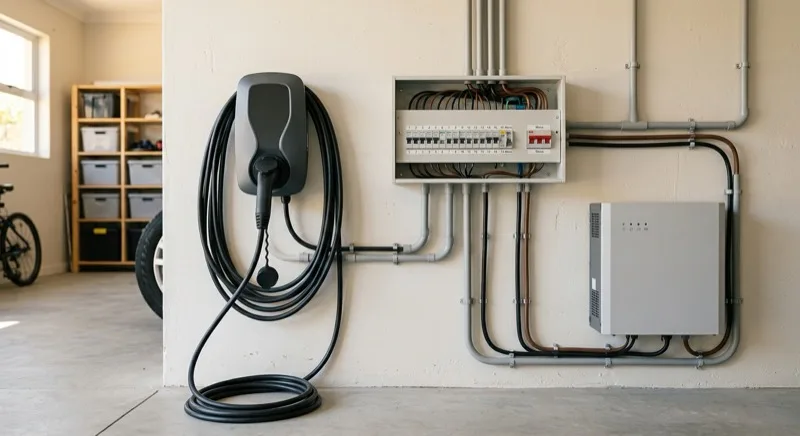
V2H feeds energy from the car’s battery into your home’s circuits, for example to keep essential circuits running during an outage, or to discharge cheap overnight energy during expensive peak periods. This is a real grid-interactive installation: it needs a compatible bidirectional EV, a compatible bidirectional charger, and additional switchgear so the system isolates safely from the grid and can’t back-feed the network unsafely. This is emerging in NZ rather than commonly installed (Source) (verified June 2026).
V2G: vehicle-to-grid
V2G goes one step beyond V2H: as well as powering your home, the car can export energy back to the grid, potentially earning you money or supporting the network at peak times. On top of the hardware V2H needs, V2G requires commercial and technical agreements with your electricity retailer and lines company, plus the market rules that let a household be paid for two-way energy. Those frameworks are still being developed in New Zealand (Source) (verified June 2026).
What you’d need for each
| Capability | Compatible EV | Bidirectional charger | Switchgear | Retailer/grid agreement |
|---|---|---|---|---|
| V2L | Yes (model-dependent) | No | No | No |
| V2H | Yes | Yes | Yes | No |
| V2G | Yes | Yes | Yes | Yes |
On the vehicle and charger side, compatibility is the catch. Historically, two-way charging ran over the CHAdeMO standard, which is now uncommon on new EVs; bidirectional charging over the more common CCS standard is emerging but far from universal. The practical takeaway: most EVs and chargers sold in NZ today are not bidirectional, so check the specific car and charger rather than assuming.
NZ state of play
New Zealand is actively exploring two-way charging, but it’s early.
- The EECA Queenstown trial. EECA is running an 18-month two-way charging trial based in Queenstown, with installs running through 2026 and a report expected in late 2027, to understand how bidirectional chargers perform in real NZ conditions (Source) (verified June 2026).
- Industry activity. Companies including Evnex and Vector are among the NZ parties developing or exploring V2G in this space (Source) (verified June 2026). They are trialling and developing, not selling a mainstream home product.
Why it isn’t a buy-it-today home product yet: the compatible hardware is barely on the market here, installation involves grid-interactive switchgear and a Registered Electrician, and the retailer and network arrangements that make V2G worthwhile commercially are still being worked out. That will change over the next few years, but it hasn’t yet.
Why people want it
The appeal is real, which is why the search interest is growing:
- Backup power in outages. A car battery holds far more energy than a typical home battery, so V2H is attractive in areas prone to outages.
- Time-of-use arbitrage. Charge cheaply overnight, then discharge during expensive peak windows. This is useful if your plan has a strong time-of-use price difference. See EV & off-peak power plans.
- Supporting the grid. V2G could let households earn from exporting energy at peak times and help the wider network, once the rules and payments exist.
The catches
Set expectations honestly before getting excited:
- Battery warranty and degradation. Regularly cycling your traction battery for the home or grid raises questions about wear and warranty cover; manufacturer positions vary and are still settling.
- Cost. Bidirectional hardware and the extra switchgear add cost over a standard install. Ranges aren’t settled while the market is this thin, so treat any quote as indicative.
- Limited compatible hardware. Few EVs and few chargers on sale in NZ support it today.
- Regulatory immaturity. Especially for V2G, the retailer and network frameworks are not finished, so the payback case is uncertain.
Should you wait for it?
No. Don’t delay a normal home charger install on the promise of V2G. The honest guidance:
- Install a good smart charger now. A standard 7kW wall-mounted charger already delivers the everyday wins: convenient home charging, off-peak scheduling, and solar use. The typical anchor for that install is around $1,500–$2,500 for a 7kW single-phase setup with no switchboard work, and all figures are indicative. See smart EV chargers in NZ and, if you have panels, EV charging with solar.
- Treat V2H/V2G as a future, separate purchase. The bidirectional charger and switchgear you’d eventually need are a different product from your everyday charger, so buying now doesn’t lock you out of bidirectional later, and waiting now just means going without convenient charging in the meantime.
- Revisit in a few years. Watch the EECA trial findings (report expected late 2027) and the retailer/grid frameworks as they mature (Source) (verified June 2026).
If V2L, meaning running a device or appliance from your car, is what you actually want, check whether your specific EV model supports it; that needs no special charger and works today.
For everything else, the practical move is to get a smart-ready charger installed now and keep bidirectional charging on your radar for later. If you’d like an installer to spec a smart charger that covers your needs today, request a quote from a local installer and mention any interest in future solar or bidirectional plans so they can advise on switchboard headroom.
Frequently asked questions
Can my EV power my house in New Zealand?
For most people, not yet. Some EVs sold in NZ can run an appliance or device through a vehicle-to-load (V2L) socket today, but powering your whole house (vehicle-to-home, or V2H) needs a compatible bidirectional EV and a compatible bidirectional charger with the right switchgear, a combination that is still emerging here rather than something you can simply buy and install. Most EVs and chargers sold in NZ are not bidirectional.
What's the difference between V2G, V2H and V2L?
V2L (vehicle-to-load) powers a device or appliance directly from a socket on or in the car. V2H (vehicle-to-home) sends energy from the car's battery into your home's circuits, typically as backup or to offset peak-rate power. V2G (vehicle-to-grid) goes a step further and exports energy back to the grid, which also needs your electricity retailer and lines company to support it commercially.
Is vehicle-to-grid available in NZ yet?
Not as a mainstream home product. EECA is running an 18-month two-way charging trial based in Queenstown, with installs through 2026 and a report expected in late 2027, and companies including Evnex and Vector are developing or exploring V2G. The frameworks that would let households export and be paid for it are still being worked out, so treat V2G as emerging, not buy-it-today.
Do I need a special charger for bidirectional charging?
Yes. Standard home chargers only send power one way, into the car. Bidirectional charging needs a compatible bidirectional charger, a compatible EV, and, for V2H, additional switchgear so the system isolates safely from the grid. V2G adds retailer and grid agreements on top. Most chargers sold in NZ today are one-way only.
Should I wait for V2G before installing a home charger?
No. Don't delay a normal 7kW home charger install on the promise of V2G. A good smart charger pays for itself now through off-peak scheduling and solar use, and the hardware you need for bidirectional charging is a separate, future purchase. Install a smart-ready charger today and revisit V2H in a few years as the products and rules mature.