Comparison
Tesla Wall Connector vs Evnex: which home charger for your NZ home?
The two most-asked-about home chargers in NZ, compared: Tesla's keenly priced Wall Connector against NZ-designed Evnex. Speed, smart features, solar, support and cost, and which suits which home.
The Tesla Wall Connector and Evnex are the two home chargers New Zealand buyers ask about most. One is a keenly priced global unit, the other designed and supported here in NZ. Both are excellent 7kW single-phase wallboxes that will charge virtually any EV. This is a genuine head-to-head: where each pulls ahead, and which suits which home.
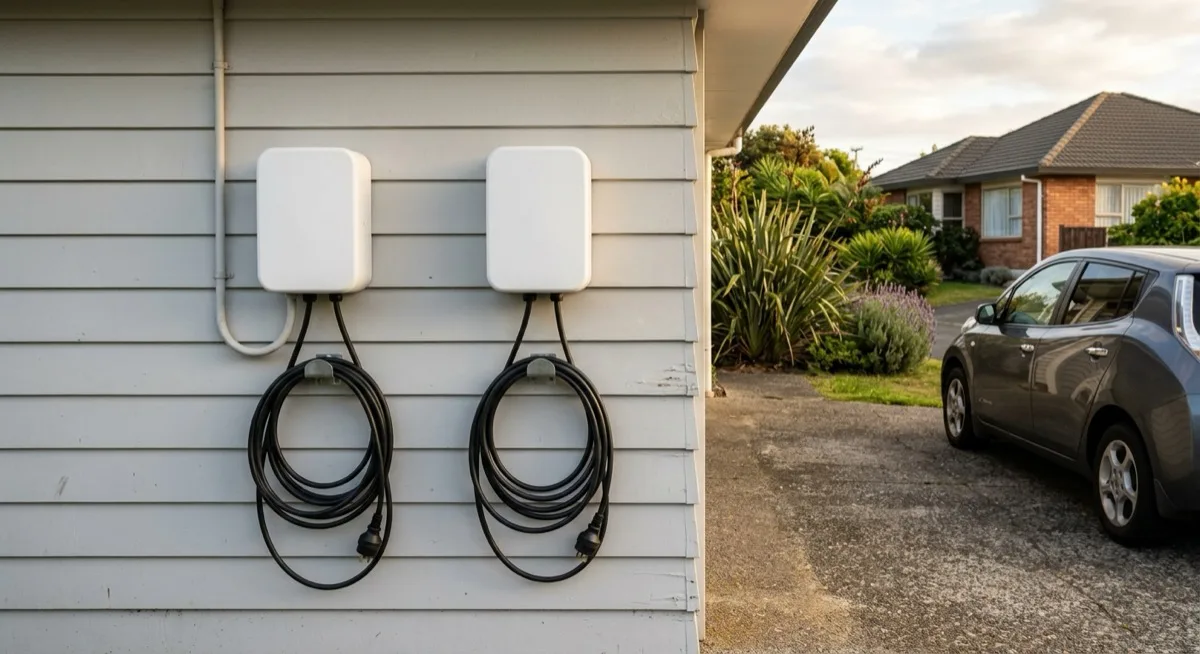
The short answer
- Choose the Tesla Wall Connector if you want the best value, you own a Tesla (it integrates with the car and app), or you simply want a well-built unit at a sharp price. It charges any Type 2 EV, not just Teslas.
- Choose Evnex if local support matters most to you: NZ design, NZ-based warranty and parts, and firmware built for local conditions.
Both are universal Type 2 chargers, both need a Registered Electrician, and both land in the same $1,500–$2,500 typical installed range. You won’t go wrong with either. The choice is about priorities, not quality.
Side by side
| Tesla Wall Connector | Evnex | |
|---|---|---|
| Origin | Global (Tesla) | Designed in New Zealand |
| Typical speed | 7kW single-phase | 7kW single-phase |
| Works with any EV? | Yes, Type 2 | Yes, Type 2 |
| Smart control | Yes, via Tesla app | Yes, Evnex app + scheduling |
| Off-peak scheduling | Yes | Yes |
| Native solar diversion | No | Via load management, not full diversion |
| Local NZ support | Via distributor | NZ-based |
| Hardware cost (indicative) | Often the lower of the two | Mid-range |
| Best for | Tesla owners, value buyers | Buyers who value local support |
Feature detail varies by model and firmware, so confirm the exact unit with your installer.
Where the Tesla Wall Connector wins
Value. It’s consistently one of the better-priced quality wallboxes in NZ, and the build quality is high for the money.
Tesla integration. If you drive a Tesla, charging stats and scheduling live in the same app you already use for the car, which is genuinely convenient.
It’s not Tesla-only. The biggest misconception is that it only charges Teslas. It uses the standard Type 2 connector, so any modern EV (BYD, Kia, Polestar, BMW, MG) charges from it normally. For a non-Tesla household that wants a sharp price, it’s still a strong pick.
The main trade-off: no native solar diversion, and support runs through a distributor rather than a local manufacturer.
If you’ve already settled on Tesla and want the spec, current NZ pricing and what fitting one actually involves, our Tesla wall charger installation guide covers the Tesla home charger in full.
Where Evnex wins
Local design and support. Evnex is designed in New Zealand for the local grid and conditions, with support based here. If you’d rather your warranty, firmware and parts come through a domestic channel than an overseas one, that’s Evnex’s core advantage. For many buyers it’s the deciding factor.
Smart features built for NZ. App scheduling and load management are designed around NZ power plans and homes.
The trade-off: hardware typically costs a little more than the Tesla unit, and it has no full native solar-diversion mode either.
What neither is the best at: solar
If your priority is charging from surplus rooftop solar, neither of these is the natural choice. A myenergi Zappi does native solar diversion better. If solar isn’t a factor, this doesn’t matter and you can decide on support, price and ecosystem instead. See EV charger with solar and the wider best EV charger comparison if you want to weigh other brands too.
Cost: barely any difference
The brand difference shows up in hardware (a few hundred dollars), not the install. Both fit on a standard single-phase circuit, so the labour is the same, and a typical install lands around $1,500–$2,500.
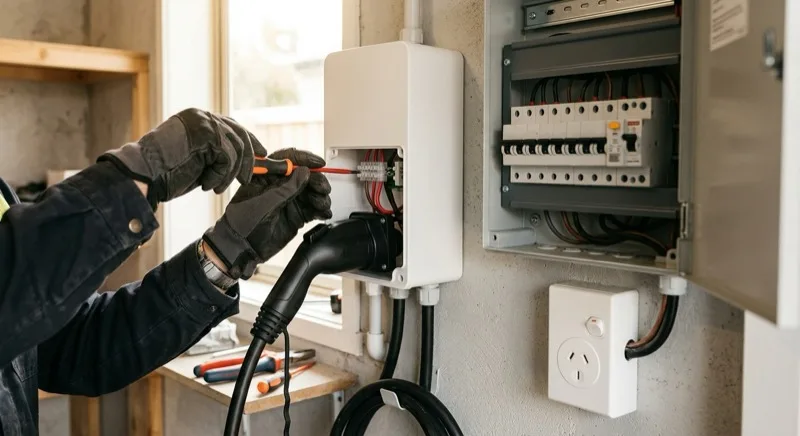 What actually moves your quote is the cable run and
whether you need a switchboard upgrade,
both of which are brand-independent. See the full cost guide.
What actually moves your quote is the cable run and
whether you need a switchboard upgrade,
both of which are brand-independent. See the full cost guide.
How to decide
- Own a Tesla, or want the best value? → Tesla Wall Connector.
- Value NZ-based support and design above all? → Evnex.
- Solar is your priority? → Look at a Zappi instead (see best EV charger).
- Still unsure? → Run the charger chooser.
Whichever you pick, the install is the same kind of job. When you’re ready, get free quotes and tell us which charger you’re leaning towards. Local Registered Electricians will price your actual setup around it.
Frequently asked questions
Is the Tesla Wall Connector better than Evnex?
Neither is universally better; they suit different priorities. The Tesla Wall Connector is keenly priced, well built and integrates with the Tesla app, and it charges any EV via Type 2, not just Teslas. Evnex is designed and supported in New Zealand, which matters for firmware, warranty and local parts. If you own a Tesla or want best value, lean Tesla; if you value local support and NZ-specific design, lean Evnex.
Can the Tesla Wall Connector charge a non-Tesla EV?
Yes. The Tesla Wall Connector uses the standard Type 2 connector used by virtually all EVs sold in NZ, so it charges any modern EV. A Kia, BYD, Polestar or BMW charges from it just like a Tesla does. You don't need a Tesla to buy or use one.
Does Evnex work with a Tesla?
Yes. Evnex chargers use the Type 2 connector, so they charge a Tesla exactly as they charge any other EV. Brand of charger and brand of car don't need to match, because both units are universal Type 2 chargers.
Which is cheaper to install, Tesla or Evnex?
The installation labour is essentially the same for both: a typical 7kW single-phase install runs around $1,500–$2,500 all-in. The Tesla Wall Connector hardware is often a little cheaper than Evnex, but the difference is small next to install variables like cable run length or a switchboard upgrade, which affect the total far more than the brand.
Which is better for solar, Tesla or Evnex?
Neither has native solar diversion in the way a myenergi Zappi does. If charging from surplus solar is your priority, a Zappi is the stronger pick. Between Tesla and Evnex, solar isn't the deciding factor, so choose on support, price and ecosystem instead, and see our solar charger guide if solar diversion matters to you.
Do both need a Registered Electrician to install?
Yes. Both the Tesla Wall Connector and Evnex are hardwired chargers that must be installed by a Registered Electrician on a dedicated, protected circuit, with a Certificate of Compliance issued for the finished work. Neither is a DIY job, regardless of brand.