Safety guide
Do I need a switchboard upgrade to install an EV charger?
A switchboard upgrade is the most common reason an EV charger quote comes in higher than expected. Here's what triggers one in NZ homes, what it costs, and how to find out before you commit.
If you’ve been quoted more than you expected for a home EV charger, a switchboard upgrade is the most likely reason. It’s also the hardest cost to predict from the outside, which is why a quick assessment up front saves surprises later.
Short answer
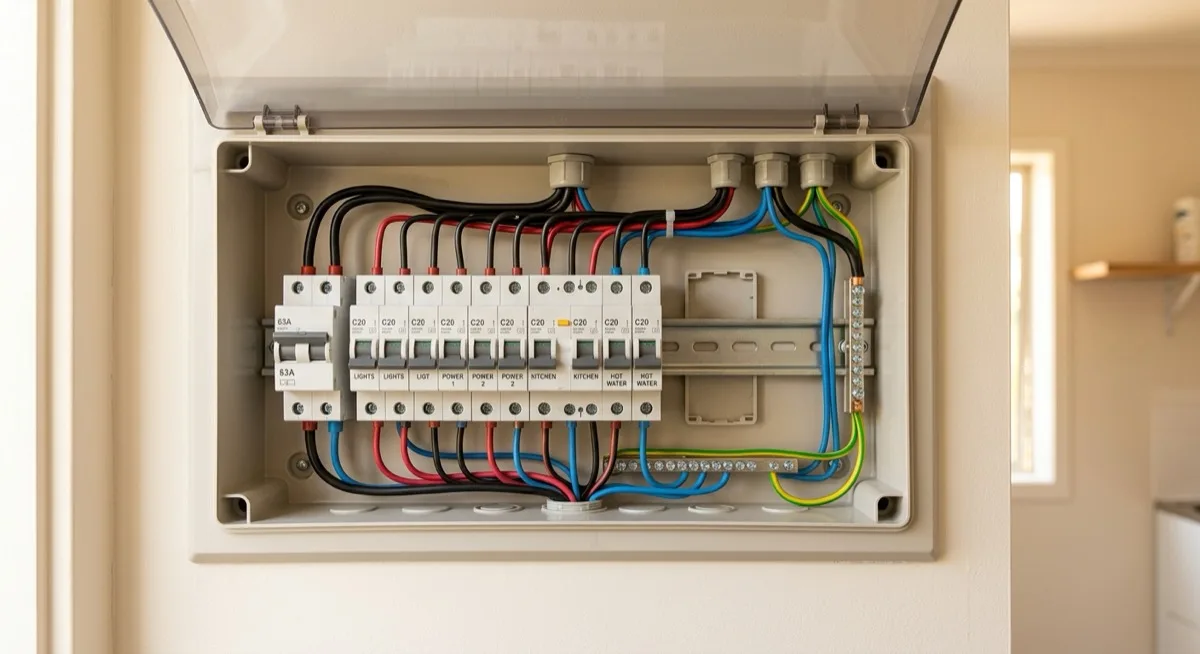
Not always. Many NZ homes, particularly those built or rewired in the last 15–20 years, have a modern switchboard with spare capacity and can take a 7kW EV charger with no changes to the board at all. The issue tends to arise in older homes or homes that already run a lot of high-draw appliances.
If your board is modern, has spare circuit breaker slots, and already has RCD/RCBO protection, the electrician will likely run a dedicated circuit and be done. If your board is old, crowded, or uses ceramic fuses, an upgrade is more likely, and budgeting for it before you get quotes avoids a nasty mid-job surprise.
What a switchboard upgrade is, and why EV chargers need a dedicated circuit
Your switchboard is where the mains supply enters your home and splits into individual circuits. Each circuit has its own breaker or fuse, and each carries a load limit.
An EV charger draws substantial, sustained power: a standard 7kW wall-mounted charger runs at full load for several hours overnight. For that reason, WorkSafe’s EV Charging Safety Guidelines say a domestic charging station should sit on its own dedicated final sub-circuit, a breaker and wiring used only for the charger (WorkSafe EV Charging Safety Guidelines, 2nd ed, verified June 2026). Sharing a circuit with other appliances creates an overload risk and won’t pass a compliance check.
That dedicated circuit also needs modern RCBO protection (a combined residual current device and circuit breaker) on the board. If your board can’t provide a free, correctly rated slot with RCBO protection, some of the board needs to be upgraded before installation can proceed.
This isn’t optional or an upsell. It’s a safety and compliance requirement. The work is prescribed electrical work, which can’t be treated as complete until a Certificate of Compliance is issued for it (Electricity (Safety) Regulations 2010, reg 65, verified June 2026), and a licensed electrician won’t sign it off unless the board meets the standard.
What triggers a switchboard upgrade
Four conditions make a board upgrade likely. A single one is often enough:
- No spare capacity. The board is full, with no room for a new dedicated circuit breaker.
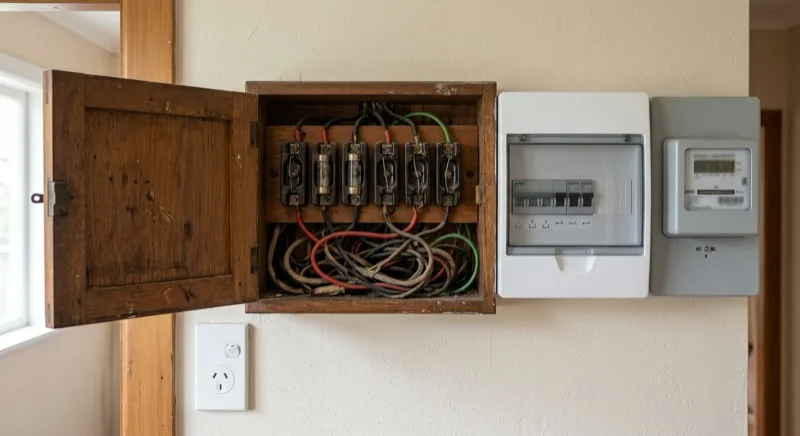
- Ageing or non-compliant equipment. Boards with ceramic fuses or rewireable fuses rather than modern circuit breakers can’t accept a new RCBO directly. Older boards may also lack the busbars or physical space for expansion.
- Missing protection. Some boards, particularly pre-2000 boards, have circuits without individual RCD/RCBO protection. Adding an EV circuit requires this protection, and it may need to be retrofitted to nearby circuits in the process.
- Total load. If your home’s existing appliances already draw heavily on your mains supply (especially on single-phase power), adding a 7kW charger could push total demand past what the supply can safely carry. In this case, the mains connection itself may need to be reassessed, not just the board.
Newer homes built to current NZ wiring standards often have plenty of headroom and need no board changes at all. Older homes, roughly pre-2000 construction that hasn’t had a rewire or board upgrade since, are where most of the upgrade work appears.
How to tell if your switchboard might need upgrading
You can’t diagnose this yourself (that’s what the electrician is for), but you can look for warning signs before the quote arrives:
- Ceramic or rewireable fuses instead of switch-style breakers. These are a strong indicator the board is old enough to need upgrading.
- A crowded board with no obvious spare slots between the existing breakers.
- No RCD/RCBO switches visible. On a modern compliant board you’ll see taller, two-part breakers (breaker + RCD in one unit) or a separate RCD block covering groups of circuits.
- Multiple appliances sharing a single breaker in ways that suggest circuits are already near capacity.
If you see any of these, flag it when you request a quote, or include a photo of the board (door open). A good installer can often give an early read before visiting, which saves everyone time.
When load management can avoid an upgrade
Where the issue is total load rather than missing protection or no spare slots, a load management device, also called a dynamic load balancer, can sometimes avoid an upgrade entirely.
Load management works by monitoring the home’s live electricity draw and reducing the charger’s output when the house is using a lot of power. If you’re running the oven, heat pump, and dishwasher at the same time, the charger scales back to keep total demand under the supply limit. When demand drops, charging speeds back up.
Load management is particularly useful on single-phase supplies with modest headroom, and it’s a feature built into many modern smart chargers. It won’t fix a board that has no spare slots or lacks RCD/RCBO protection, but if the only concern is peak load, it’s worth asking about before assuming a full board upgrade is needed.
See the single-phase vs three-phase guide for more on how supply type affects your charging options.
What a switchboard upgrade costs
As a rough guide, minor board or protection work may start under $1,000, but a switchboard upgrade commonly adds about $1,500–$3,000 on top of the standard charger installation cost. These figures are indicative only, and the actual cost depends on:
- Whether only an RCBO needs to be added, or the entire board needs replacing
- The age and brand of the existing board
- Whether the mains connection needs upgrading alongside the board
- Labour time on-site
A small targeted change (adding an RCBO to a board that otherwise has capacity) sits toward the lower end. A full board replacement on an old ceramic-fuse panel sits toward the upper end or beyond. Get this scoped during the quote, not after the install starts.
See the EV charger installation cost guide for how a switchboard upgrade fits into the total job cost.
How to avoid surprises
The single most effective step is to treat the switchboard assessment as part of the quote, not a separate follow-up:
- Include a clear photo of your switchboard (door open, if safe to open) when you request a quote. Many installers can flag likely issues from a photo and quote accordingly, rather than discovering a problem after the job has started.
- Ask specifically: “Does the quote include the switchboard assessment, and what would a board upgrade add?” A transparent installer will give you a conditional or tiered price, not a flat price that might blow out.
- Ask whether load management is an option if the only concern is total load capacity, as it may be cheaper than a board upgrade.
Make sure a Registered Electrician is scoping the job. Only a Registered Electrician can carry out and certify this work; a general handyperson or low-voltage technician cannot issue the required Certificate of Compliance.
Knowing the switchboard position in advance turns a nasty mid-job surprise into a planned line item in your budget.
What to send for an accurate quote
Include these when you request a quote:
- A photo of your switchboard (open door, whole board visible)
- A photo of your parking area or garage from the direction of the house
- Approximate cable route from switchboard to parking: is it a straight run through a garage wall, or a long run across the property?
- Your EV make and model (affects charger recommendation)
- Whether you have single-phase or three-phase power (check your power bill or ask your network company if unsure)
- Any charger brand or model you have in mind
- Preferred timing
The more of this you include, the more accurately an installer can quote, and the less likely a switchboard issue is to surface as a surprise after you’ve already committed.
Frequently asked questions
How do I know if my switchboard needs upgrading for an EV charger?
A Registered Electrician needs to assess it. The common triggers are an older or full board with no spare capacity for a new dedicated circuit, missing modern protection (RCD/RCBO), or signs of ageing like ceramic fuses or a crowded board. Sending a clear photo of your switchboard lets an installer flag this early.
How much does a switchboard upgrade cost in NZ?
It depends on the work. Minor board or protection changes may start under $1,000, but a switchboard upgrade commonly adds about $1,500–$3,000 on top of the charger installation. A minor change differs greatly from a full board replacement, so this is an indicative range only, and your electrician will confirm after inspecting.
Can I install an EV charger without upgrading my switchboard?
Often yes. Many homes have enough capacity for a 7kW charger as-is. Where capacity is tight, load management (which limits the charger's draw when the house is using a lot of power) can sometimes avoid an upgrade. A Registered Electrician will tell you which option suits your home.
Who can assess and upgrade my switchboard?
Only a Registered Electrician can carry out switchboard work, and a Certificate of Compliance must be issued for the work. This is the same person who would install your charger, so it's usually assessed as part of the quote.
What signs can I spot myself before calling an electrician?
Look for ceramic or rewireable fuses rather than modern breakers, a crowded board with no obvious spare slots, and whether any circuits share a breaker without individual RCD/RCBO protection. These are indicators, not a diagnosis, but they help set expectations before the quote comes in.
Does a three-phase supply make a switchboard upgrade less likely?
Not necessarily. A three-phase supply gives you more capacity overall, but the board still needs a free slot, correct protection, and room for the dedicated EV circuit. That said, homes on three-phase are less likely to hit a hard load ceiling from a 7kW charger. See the single-phase vs three-phase guide for more.