Safety guide
Can any electrician install an EV charger in New Zealand?
What the rules actually require for home EV charger installation in NZ (Registered Electricians, dedicated circuits, the Certificate of Compliance) and why EV-charger experience still matters.
It’s a sensible question to ask before letting anyone wire a high-power circuit into your home. The short answer: technically, any Registered Electrician can legally do the work, but EV-charger experience still matters more than you might expect, and there are specific compliance steps that every installation must follow.
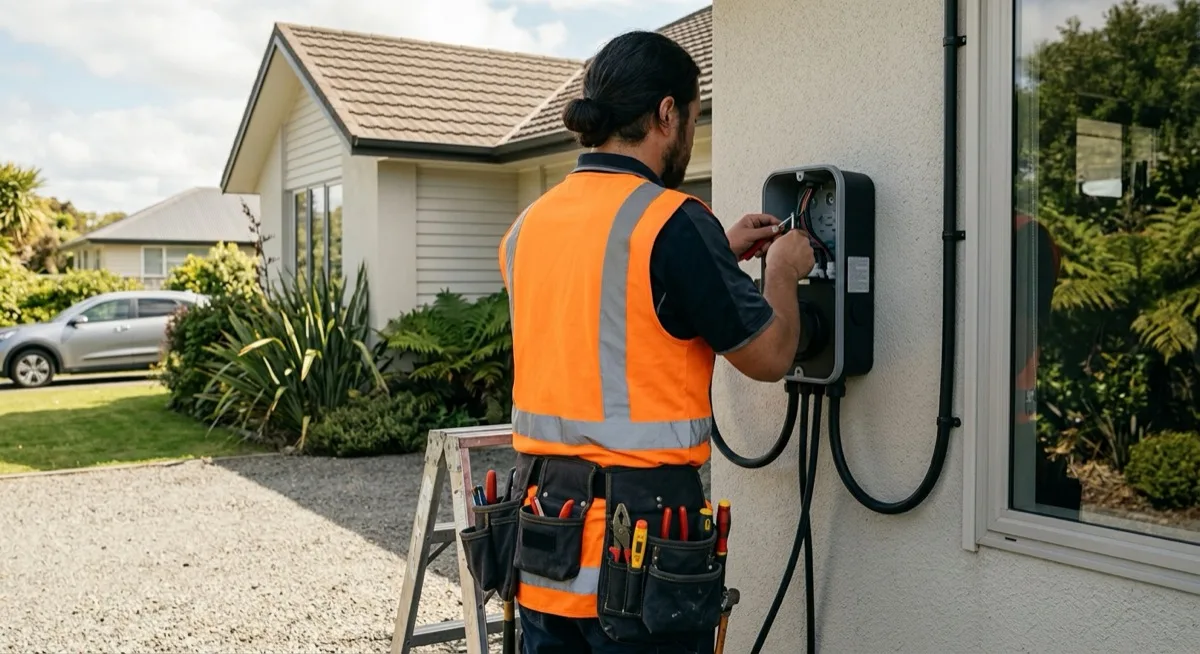
The short answer: Registered Electrician, yes, but experience matters too
Home EV charger installation is classified as prescribed electrical work in New Zealand. That means it cannot be done by an unlicensed person, a handyman, or even a competent non-electrician. The law requires a Registered Electrician, and on completion they must issue a Certificate of Compliance.
Within those rules, any Registered Electrician is legally permitted to carry out the work; there is no separate EV-charger licence or specialist endorsement required. But in practice, experience with EV charger installs makes a real difference. An electrician who works on EV chargers regularly will size the circuit correctly, flag switchboard issues early, handle the charger commissioning, and know how load management works with your home’s electrical setup.
If you’re shopping around, look for someone who can point to EV installs they’ve done before, not just a general electrician who has heard of a wallbox.
What the law requires
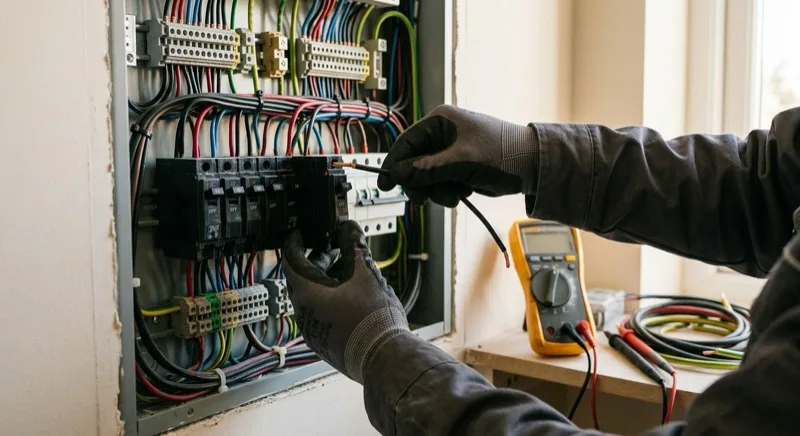
Installing a home EV charger is prescribed electrical work, which under the Electricity (Safety) Regulations 2010 cannot be treated as complete until a Certificate of Compliance is issued for it (Electricity (Safety) Regulations 2010, reg 65, verified June 2026), and WorkSafe’s EV charging guidance reinforces the same standard for safe charging at home. In practice, that means every installation must:
- Be carried out by a licensed electrical worker. Verify both EWRB registration and a current practising licence, since registration alone isn’t authority to work (EWRB Practising Licence, verified June 2026).
- Be supplied through a properly designed circuit. A 7kW wallbox draws around 32A continuously, so WorkSafe’s EV Charging Safety Guidelines say a domestic charging station should be supplied from a dedicated final sub-circuit (WorkSafe EV Charging Safety Guidelines, 2nd ed, verified June 2026). It should not be improvised from an existing general-purpose circuit unless the electrician has designed and certified the installation as compliant, and the installer must ensure the incoming mains will not be overloaded.
- Include appropriate RCD/RCBO protection on the circuit to protect against fault current and nuisance tripping.
- End with a Certificate of Compliance issued by the Registered Electrician confirming the work meets the applicable standards.
There is no NZ law that requires a specific EV-charger certification beyond being a Registered Electrician, but EECA and most installer networks do encourage choosing someone with relevant hands-on experience, for the practical reasons below.
Why EV-charger experience still matters
Even though any Registered Electrician is legally permitted, there is a real skill gap between a general domestic electrician and someone who works on EV charger installs regularly. Here is where the experience gap shows up:
Switchboard assessment. EV chargers add a sustained load to your home’s electrical system, often the single largest load in the house. An experienced installer will assess whether your switchboard has the spare capacity for a new dedicated circuit, or whether an upgrade is needed first. Missing this leads to mid-job surprises. See do I need a switchboard upgrade? for what to expect.
Load management. Where a switchboard is borderline, load management, which automatically limits the charger’s draw when the rest of the house is pulling heavy loads, can sometimes avoid a costly upgrade altogether. Not every electrician knows how to configure this, or which charger models support it well.
Cable routing and mounting. Getting the cable run right the first time (the right cable gauge, appropriate conduit, clean entry points, weatherproofing for outdoor installs) matters for both safety and aesthetics. Experienced installers have done dozens of these and know the common pitfalls.
Charger commissioning. Many modern wallboxes (Evnex, Wallbox, myenergi Zappi and others) require network setup, app pairing, and load-management configuration after physical installation. This is not standard electrical work; it’s part commissioning, part tech setup. An EV-specialist installer does this routinely.
Future-proofing. If you might add solar, a battery, or a second EV later, the cable gauge and circuit design choices made now affect what’s practical in two years. A good installer will ask about your plans.
The bottom line: a technically valid install by an inexperienced electrician may still result in an undersized circuit, a missed switchboard issue, or a charger that was never properly commissioned. Choosing someone who does EV installs regularly reduces that risk significantly.
What a Certificate of Compliance is, and why you must get one
A Certificate of Compliance (CoC) is the formal document issued by the Registered Electrician confirming that the prescribed electrical work was completed safely and to the required standard. For an EV charger installation, this covers the wiring, circuit protection, and connection to your switchboard.
You are entitled to receive a CoC, and you should insist on one. Here is why it matters:
- It’s your legal proof the work was done by a Registered Electrician to the required standard.
- Your home insurer may need it. If a fault related to the installation ever results in a claim, a CoC is the documentation that confirms the work was compliant. Without one, a claim could be declined.
- It protects a future property sale. If you sell your home, buyers’ solicitors or building inspectors may ask for compliance documentation for electrical upgrades.
- It protects you if something goes wrong. If the installation has a defect and you need to pursue the electrician, the CoC establishes what was certified at the time.
Keep your CoC in a safe place, with your other property compliance documents, not just in an email inbox. For exactly what a compliant certificate should contain, and what to do if your installer never issued one, see the Certificate of Compliance guide.
Red flags: who not to let wire a charger
Not every offer to install a charger is a compliant one. Watch for these warning signs:
- No mention of a Certificate of Compliance. Any legitimate Registered Electrician will issue one automatically. If it isn’t mentioned, ask explicitly, and if they seem uncertain or dismissive, walk away.
- No EWRB registration. You can verify a person’s registration on the EWRB’s public register before booking. If they can’t tell you their registration number, do not proceed.
- A quote that seems unusually low. A proper install (dedicated circuit, RCD protection, CoC) takes real time and materials. A price well below the typical installed cost range is worth scrutinising.
- Offering to wire it from an existing general-purpose circuit. For a permanent wallbox, WorkSafe’s guidelines call for a dedicated final sub-circuit sized for the load. An installer reusing an existing shared circuit without designing and certifying it for the added EV load is a sign of someone cutting corners.
- No switchboard assessment. A responsible installer will want to see your switchboard before or during the job. If they quote without asking about it, they haven’t thought through the full scope.
The easiest way to catch these before you book is to ask directly. 12 questions to ask an EV charger installer turns each one into a question you can put to an electrician, with what a good answer sounds like and the answers that mean you should keep looking.
What to send for an accurate quote
The fastest way to get an accurate, honest quote is to give installers the information they need upfront:
- A clear photo of your switchboard (door open if safe to do so). This lets an experienced installer flag likely capacity issues or upgrade needs before they arrive.
- A photo of your parking area or garage, showing roughly where you want the charger mounted.
- Your best estimate of the cable route from switchboard to charger location: distance matters for materials and labour.
- Your EV model and whether you have single-phase or three-phase power (if you know).
- Any charger preference you have (brand, speed, smart features).
Request a quote and include these details, and it lets us match you with Registered Electricians who can give you a precise price rather than a wide ballpark. For typical 7kW single-phase installs, the all-in cost usually lands in the $1,500–$2,500 range, but your switchboard situation is the biggest variable. If you’re unsure what yours looks like, read do I need a switchboard upgrade? first, then come back with a photo.
Frequently asked questions
Can any electrician install an EV charger in NZ?
It must be installed by a Registered Electrician on a dedicated, protected circuit, with a Certificate of Compliance issued on completion. Beyond that legal requirement, it's worth choosing someone with genuine EV-charger experience, as they'll assess switchboard capacity, cable runs and load management more reliably.
What is a Certificate of Compliance and do I need one?
A Certificate of Compliance (CoC) is the document a Registered Electrician issues to certify that prescribed electrical work was done safely and to standard. Yes. You should receive one for your EV charger installation. Keep it; it's your proof the work was certified and that the installation is insurable.
Is it safe to charge an EV from a normal 3-pin plug?
Only occasionally, at low power. A standard socket isn't designed for the sustained high load of daily EV charging, and relying on one can stress the circuit. For regular charging, a dedicated wallbox installed by a Registered Electrician is the safe choice.
Does my home insurer need to know about the EV charger installation?
It's worth notifying your insurer once the charger is installed, especially for home and contents policies. A valid Certificate of Compliance is the document that confirms the work was done safely, and having it on file supports any future insurance claim involving the installation.
Can an unlicensed person do any part of the EV charger installation?
No. The wiring, circuit work, and connection to the switchboard are all prescribed electrical work in NZ. Only a Registered Electrician can perform and sign off this work. An unlicensed person doing electrical work risks voiding home insurance, creating fire and safety hazards, and incurring serious legal liability.