Home charging
How to charge an EV when you have no off-street parking
No garage or driveway? You can still own an EV in New Zealand. Here are your real options, from body-corporate installs to workplace and public charging, and when a home charger is still possible.
Plenty of New Zealanders want an EV but worry they can’t have one because they don’t have a garage or driveway. The good news: no off-street parking doesn’t rule out EV ownership. Large numbers of EV owners in apartments, townhouses and rentals charge happily without a home charger. What it does change is where and how you charge, and whether a dedicated home charger is even an option.
The short answer
Whether you can install a home charger comes down to one thing: do you have an allocated off-street space you control, within reach of a power supply you’re permitted to use?
- Yes, an assigned park, carport, or bay that’s yours: then charging at home is often possible, even without a garage. Treat it like any other install and get it quoted.
- No, you only have on-street or unallocated shared parking: then a dedicated home charger usually isn’t feasible, and the right plan is a mix of workplace, destination and public charging. That’s a perfectly workable way to run an EV in New Zealand.
A charger has to be fixed to a wall or post you control, and the cable has to reach a park on your own property. You can’t legally run a cable across a public footpath or berm to a car on the street. It’s a trip hazard and councils don’t permit it. So the question is never just “do I have a garage?” It’s “do I have somewhere of my own to park and mount a charger?”
First, work out what parking you actually have
Before assuming you’re stuck, check which of these describes you. The options differ a lot:
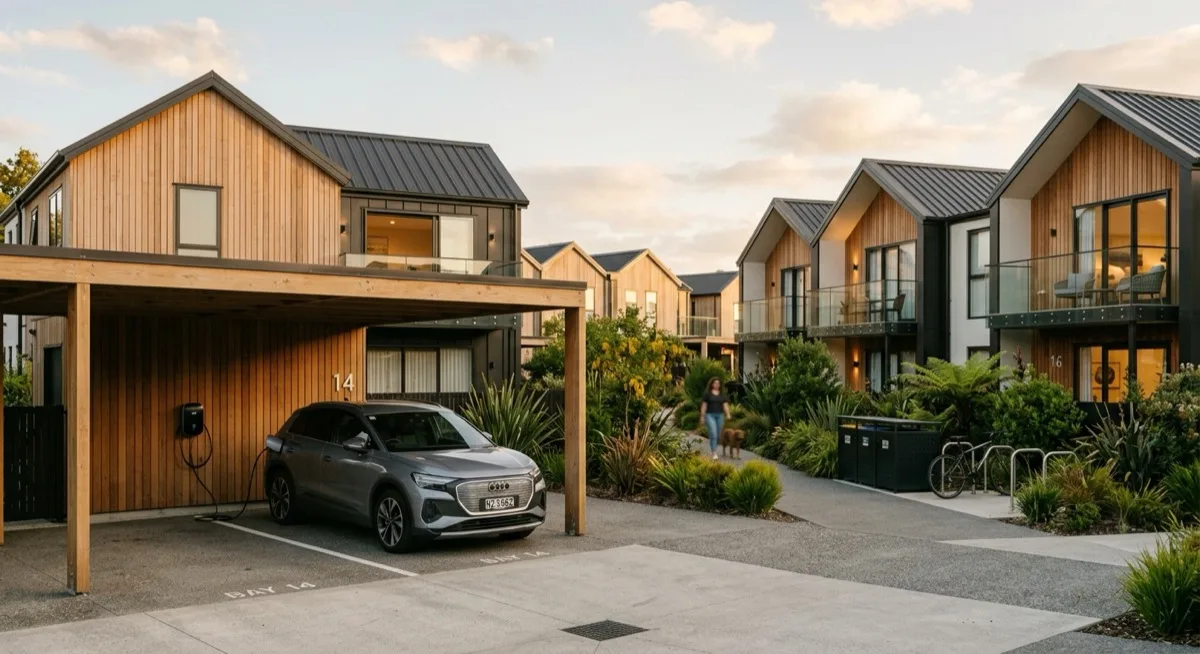
- An allocated off-street park (no garage). A carport, a marked bay in a shared driveway, or an assigned space in an apartment car park. This is the best case: a charger can usually be mounted on a nearby wall or post and wired to a supply.
- A unit-title or body-corporate property with shared parking. Common in apartments and townhouse blocks. An install is often possible but needs approval and some planning around power and metering, covered below.
- On-street or fully unallocated parking only. No space is reliably yours and there’s nowhere to mount a charger you’d be allowed to reach. A home charger isn’t practical here; plan around public and workplace charging instead.
If you’re not sure whether a space “counts,” a Registered Electrician can tell you quickly whether an install is feasible; it’s part of a normal quote assessment.
Installing a charger in a unit-title or body-corporate property
This is the situation most worth understanding, because an install is often achievable even when it doesn’t look like it at first.
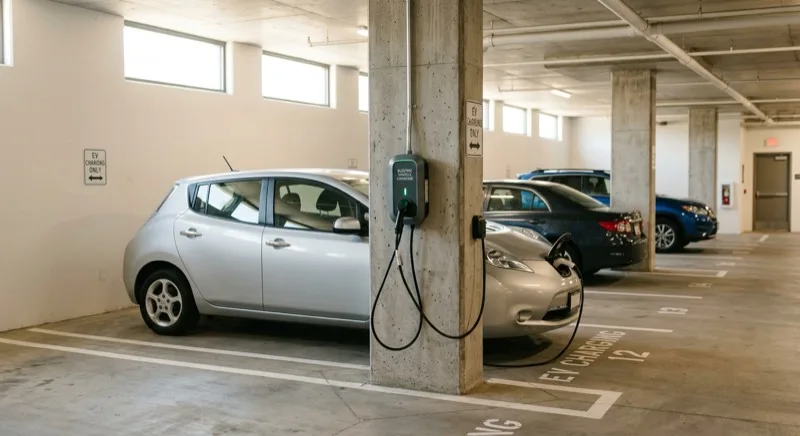
If you own (or rent) in an apartment block, townhouse development or any unit-title property, your assigned park usually sits on common property, and the nearest power supply may be a shared one. That means an install typically involves more than just the electrical work:
- Consent first. Because a charger may be mounted on or wired through common property and draws additional power, you’ll generally need approval from the body corporate (or the owners, depending on the structure) before work starts. Bring them a clear proposal (where the charger goes, where the power comes from, and how it’s metered) rather than a vague request.
- Where the power is drawn from. The electrician needs a supply point with spare capacity. Sometimes that’s your own unit’s supply (simplest for billing); sometimes it’s a shared board, which raises the metering question below.
- Metering and billing. The critical detail is making sure you only pay for the electricity you use. If the charger runs off a shared supply, it needs its own metering so your charging isn’t spread across everyone’s bill. A good installer will raise this early.
- Who pays and who owns it. Agree up front whether the charger is yours or the building’s, and who’s responsible if you move out. This matters more for renters and for shared chargers.
None of this is a dead end; it’s a process. The single most useful thing you can do is tell the installer it’s a unit-title or body-corporate job when you request a quote, so they can scope the consent and metering work, not just the wiring. Not every electrician does these jobs, so it’s worth matching with one who does.
If you only have on-street or shared parking
If no space is reliably yours, a home charger isn’t the answer, but EV ownership still is. Here’s how people in this position charge:
- Workplace charging. If your workplace has chargers (more are appearing at NZ offices, malls and car parks), topping up during the day can cover most of your driving. A few hours on a 7kW charger adds plenty of range.
- Destination charging. Supermarkets, gyms, town centres and some cafés increasingly offer AC charging while you’re parked there anyway. Slower, but “free time” you’re not using the car.
- Public fast charging. New Zealand’s public DC fast-charging network keeps growing. A fast charger can add substantial range in 20–40 minutes, useful for a weekly top-up rather than daily charging. It costs more per kWh than home charging, so factor that in.
Crucially, don’t try to bridge the gap with a cable across the footpath or a lead from a window. Improvised leads are exactly the kind of setup the home-charging safety guide warns against. The legitimate options above are what make on-street EV ownership work.
When a portable charger on an outdoor socket makes sense
If you have an allocated outdoor park but no budget or approval for a wall charger yet, a portable charger used at a dedicated outdoor socket can be a reasonable interim option, with conditions:
- The socket must be a dedicated, weatherproof outlet that a Registered Electrician has confirmed is suitable for sustained EV charging. Never use an extension lead, multi-box, or a general-purpose socket that wasn’t installed with this load in mind.
- Charging is slow: a portable charger on a standard outlet adds roughly 10km of range per hour, versus around 40km/h from a 7kW wall charger.
- It only works if the outlet is at a park you’re permitted to use and reach safely.
For most people with their own space, a hardwired wall charger is safer, faster and better value over time. The portable vs wall-mounted guide covers the trade-off in detail.
What it costs
If you can install a home charger, cost depends on your setup like any other install. A standard 7kW wall-mounted installation is typically around $1,500–$2,500 all-in (hardware plus a Registered Electrician’s labour and Certificate of Compliance), with the price driven by the cable run, switchboard capacity, and access. Body-corporate jobs can sit higher because of the extra metering and common-property work involved, which is exactly why a scoped quote matters. See the full cost guide for what moves the price.
If you can’t charge at home, the comparison that matters is public and workplace charging versus petrol. Charging at home is the cheapest option in New Zealand, but even on public charging an EV is usually still cheaper to run per kilometre than an equivalent petrol car. The running-cost calculator lets you model your real weekly distance so you can decide with numbers, not guesses.
What to send for an accurate quote
If you think a home charger might be feasible, request a quote and include these so the installer can assess your specific situation:
- Your parking arrangement: whether the space is allocated to you, a carport, an assigned bay, or shared, and a photo of where a charger could mount relative to the nearest wall or post.
- Whether it’s a unit-title or body-corporate property: this is the single most important thing to flag, so the installer can scope consent and metering, not just wiring.
- A photo of your open switchboard (or the building’s, if relevant), so the installer can check supply type and spare capacity for a new dedicated circuit.
- Your EV make and model: to confirm the correct connector and charge rate.
- Whether you own or rent, and, if you rent, that you’ll need the owner’s consent.
Honest scoping up front saves everyone a wasted site visit, and means the quote you get back reflects your actual property, not a generic estimate.
Frequently asked questions
Can I install an EV charger if I only park on the street?
Usually not a dedicated home charger. A wall-mounted charger has to be fixed to a wall or post you control and the cable has to reach a parking spot on your own property. It can't legally trail across a public footpath or be left to cross a road, which creates a trip hazard and is generally not permitted by councils. If you have no off-street space at all, the practical answer is workplace, destination, or public charging rather than a home unit. If you have even one allocated off-street park, a home charger is often still possible, so get it assessed.
Can I charge an EV in an apartment or body-corporate complex?
Often yes, but it usually needs the body corporate's or owners' approval first, because the charger draws power and may be mounted on or wired through common property. The key questions are where the power is drawn from, how your charging is metered and billed so you only pay for your own electricity, and who covers the install. A Registered Electrician experienced with unit-title or body-corporate work can scope this and tell you what consent you'll need, so flag your situation when you request a quote.
Can I run a charging cable across the footpath to my car?
No. Trailing a cable across a public footpath or berm is a trip hazard and is generally not allowed by councils, even with a cable cover. Home charging assumes the car is parked on your own property within reach of the charger. If your only parking is on the street, look at workplace and public charging instead.
I rent and have no garage. What are my options?
If your rental has an allocated off-street park, you can ask your landlord about installing a charger, but you'll need their consent as the property owner and should agree who owns and pays for it. If there's no off-street park, charging will come from work, public chargers, or a portable charger used only at a dedicated outdoor socket you're permitted to use. Many NZ renters run an EV successfully on public and workplace charging alone.
Is public charging much more expensive than charging at home?
Yes, generally. Charging at home on a standard or night electricity rate is the cheapest way to charge an EV in New Zealand, while public charging, especially fast DC charging, costs more per kWh because it bundles the hardware, network, and convenience. If you can't charge at home, it's worth modelling your real weekly distance against public and workplace rates before buying. Our running-cost calculator lets you compare.
Can I use a portable charger from a normal outdoor power point?
Only with care, and only at a dedicated, weatherproof outlet that a Registered Electrician has confirmed is suitable, never via an extension lead or multi-box. A portable charger plugged into a standard socket charges slowly (roughly 10km of range per hour) and draws a high, sustained load, so the circuit needs to be in good condition. It's a reasonable backup if you have access to a suitable outdoor socket at an allocated park, but a hardwired wall charger is safer and faster where one can be installed.