Brand guide
Zappi (myenergi) home charger installation in New Zealand
A Zappi install in NZ typically lands at $1,500–$2,500 all-in. myenergi's solar-diverting charger pushes surplus solar into the car rather than exporting it cheaply — 7kW single-phase or 22kW three-phase, tethered or untethered, CT clamps included.
In short
The Zappi is myenergi's smart home EV charger, best known for solar diversion: its eco modes charge your car from surplus solar rather than exporting it cheaply. It comes as a 7kW single-phase or 22kW three-phase unit, tethered or untethered. A typical NZ install lands in the usual $1,500–$2,500 all-in range; confirm current hardware pricing.
Zappi, made by UK brand myenergi, is the charger most people mean when they say “solar EV charger.” Its calling card is solar diversion: in its eco modes it soaks up the surplus power your panels would otherwise export cheaply and puts it into your car instead (myenergi.com/nz, verified July 2026). This guide covers what the Zappi does, indicative pricing, and how one fits a typical New Zealand install.
What makes the Zappi different: solar diversion
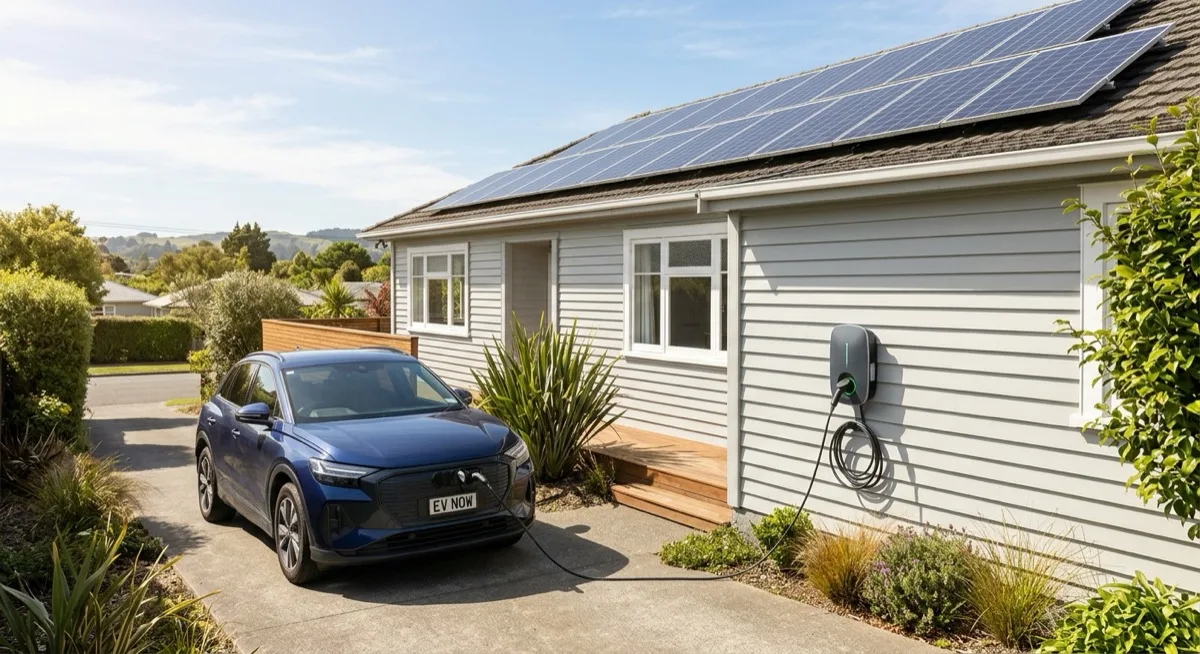
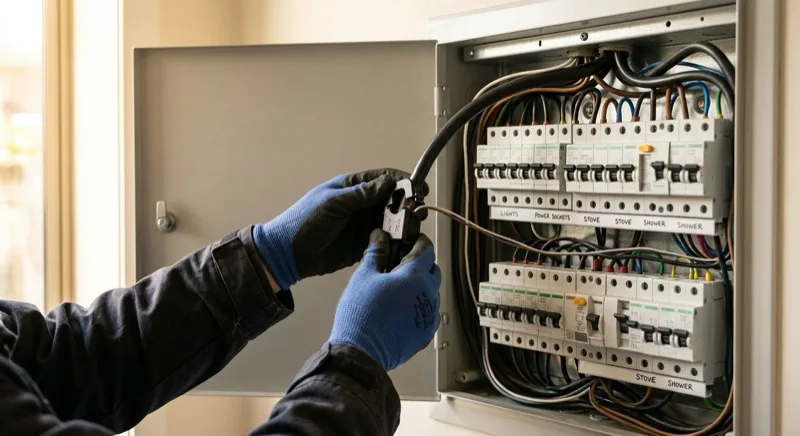
Most smart chargers can throttle to your available supply. The Zappi goes a step further: it actively diverts surplus solar into the car. Your electrician fits a small CT clamp (a current sensor) around the incoming supply at the switchboard, and that clamp lets the Zappi see exactly how much solar your home is exporting at any moment. In its eco modes it then matches the charge rate to that surplus, so you fill the car with power you generated rather than selling it back to the grid at a low buy-back rate. The Zappi ships with CT clamps in the box.
Crucially, you do not need solar for the Zappi to be useful. With no PV array it works as a normal Mode 3 smart charger drawing from the grid, and the solar features simply wait until you add panels. That makes it a sensible pick if solar is on your plan but not installed yet. For the wider picture, see the EV charger with solar guide.
Zappi charging modes
The Zappi has three modes you switch between in the myenergi app or on the unit:
- Fast: charges at full power from whatever source is available, grid or solar. This is the “just charge my car now” mode.
- Eco: blends solar and grid, adjusting continuously as your generation and household use change, and tops up from the grid so charging keeps moving.
- Eco+: charges only from genuine surplus and pauses when your home starts importing power, so you charge on solar alone.
Modes and behaviour per myenergi’s NZ product pages (myenergi.com/nz, verified July 2026).
Zappi specs at a glance
| Spec | Zappi v2.1 |
|---|---|
| Max power | 7kW single-phase or 22kW three-phase |
| Connector | Type 2 |
| Cable | Tethered (6.5m) or untethered socket |
| Charging modes | Fast, Eco, Eco+ |
| Solar | Built-in diversion via included CT clamp |
| App | myenergi app |
| Load management | Dynamic home energy management |
| Warranty | 3 years (with registration) |
Specs from the myenergi Zappi v2.1 datasheet and NZ product pages (myenergi.com/nz, verified July 2026). The v2.1 unit auto-detects whether it is wired for 7kW or 22kW.
What a Zappi costs in NZ
It helps to separate the hardware from the install. As a premium solar-diverting charger, Zappi unit-only pricing sits at the higher end of the home charger market, broadly in line with other flagship smart units. Pricing moves with promotions and retailer, so treat any figure as indicative and confirm current pricing with myenergi NZ or a local retailer rather than as a quote (myenergi.com/nz, verified July 2026). The install on top is what varies most by property; for the full picture, see the EV charger installation cost guide.
Where the Zappi fits
The Zappi is the obvious choice if you have solar, or plan to, and want your car to run on your own generation. Its eco modes are a genuine differentiator that most grid-only chargers cannot match without add-ons. It also fits well into the wider myenergi ecosystem, working alongside the eddi power diverter, the libbi home battery, and the harvi wireless sensor, all managed from one app. If you have no solar and no intention of adding it, a simpler smart charger may cover your needs for less, since you would be paying for diversion smarts you would not use. The Zappi comes tethered (a fixed 6.5m cable) or untethered (a Type 2 socket you plug your own cable into), so you can match it to your parking layout: see tethered vs untethered if you are unsure.
What installing a Zappi involves
A Zappi is fixed electrical work: a Registered Electrician installs it on a dedicated, RCD/RCBO-protected circuit and issues a Certificate of Compliance on completion. You don’t need a myenergi-certified specialist; any Registered Electrician can fit one. Most NZ homes are single-phase, where the Zappi’s 7kW is the norm; only a three-phase home chasing up to 22kW needs the multiphase wiring.
Two things make a Zappi install a little different from a plain charger. First is the CT clamp: for solar diversion to work, your electrician mounts the current sensor at the switchboard and commissions the eco modes, so it pays to confirm your installer has done this before. Second, if you have solar or a home battery, plan the whole setup together so the Zappi, your inverter, and any myenergi kit talk to each other from day one. A straightforward Zappi install still lands in the $1,500–$2,500 all-in range including the unit; the full cost guide explains what pushes it higher, usually a long cable run or a switchboard upgrade in an older home.
Frequently asked questions
Do I need solar panels for a Zappi to be worth it?
No. The Zappi's headline feature is solar diversion, but if you have no solar it still works as a standard smart charger, pulling from the grid at up to 7kW on a single-phase home. The solar smarts simply sit dormant until you add a PV array, so buying a Zappi now is a reasonable move if solar is on your medium-term plan.
How does the Zappi charge from surplus solar?
Your electrician fits a small CT clamp (a current sensor) around the incoming supply at the switchboard. That clamp tells the Zappi how much surplus solar your home is exporting, and in Eco or Eco+ mode the charger diverts that surplus into the car instead of sending it to the grid for a low buy-back rate. The Zappi ships with CT clamps included.
Is the Zappi single-phase or three-phase in NZ?
Both. The Zappi v2.1 is a multiphase unit that can be wired as a 7kW single-phase charger, which suits most NZ homes, or as a 22kW three-phase charger if your property has three-phase supply and your car can use it. Your electrician confirms which your switchboard supports before install.
Can any electrician install a Zappi in NZ?
Yes. A Zappi is fixed electrical work, so any Registered Electrician can install one on a dedicated, RCD/RCBO-protected circuit and issue a Certificate of Compliance on completion. You don't need a myenergi-certified specialist, though it helps to pick an installer who has set up the CT clamp and solar modes before, since that commissioning step is specific to the brand.