Guide
EV charging in apartments, body-corporate buildings and rentals in NZ
Apartment, unit-title or rental in NZ? How to get an EV charger approved by your body corporate or landlord, plus metering and load management.
In short
Yes, you can usually charge an EV in an apartment, unit-title building or rental. It takes an extra approval step: body-corporate consent for common-property wiring, or your landlord's written consent if you rent. Getting the power supply, metering and load management scoped early is what makes it work.
If you live in an apartment, a townhouse in a unit-title development, or a rental, you might assume a home charger is off the table. For most people it isn’t. What changes is that there’s an extra approval step before the electrical work, and a bit more planning around where the power comes from and how it’s metered. Get those sorted early and a shared-building install is very achievable.
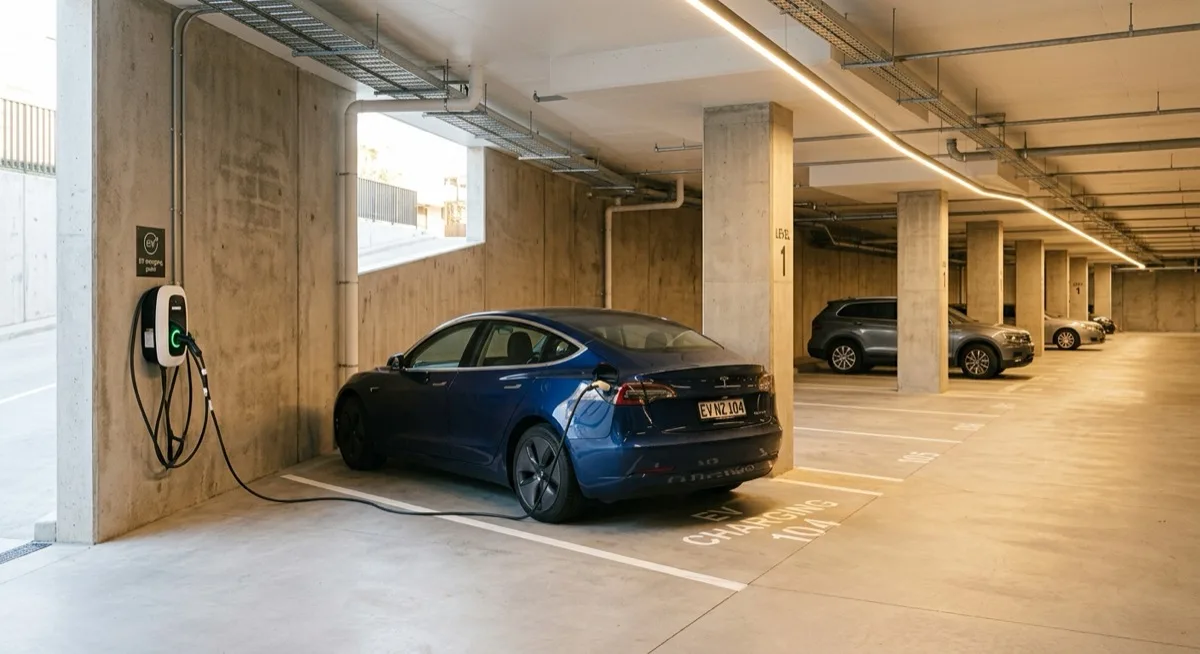
This guide is the sibling to charging an EV without off-street parking, which covers the “no space of my own” case. Here we assume you do have an allocated park (an assigned bay, a carport, a marked space in the building’s car park) but the park, the wiring route, or the power supply is shared or owned by someone else.
The short answer
You can usually charge an EV in an apartment, unit-title building or rental. Two things decide how straightforward it is:
- Who owns the wiring route and power supply? In a unit-title building your park and the nearest supply often sit on common property, so the body corporate has a say.
- Do you own or rent? If you rent, the property owner has to consent to any installation, because it’s a change to their property.
Neither is a dead end. Both are a process, and the single most useful thing you can do is flag your situation early so it can be scoped properly rather than discovered halfway through a job.
Installing a charger in a unit-title or body-corporate building
This is the situation most worth understanding, because an install is often achievable even when it doesn’t look like it at first.
In a unit-title building, your assigned park and the nearest power supply frequently sit on common property, and the building’s shared infrastructure carries the load. That means an install is rarely just a matter of booking an electrician.
- Approval usually comes first. Guidance for New Zealand bodies corporate is that owners cannot install chargers independently, because the work affects common-property systems and the building’s electrical load, so committee approval and an agreed standard are needed before installation (Crockers body-corporate guide, verified July 2026).
- Who owns what. In a typical arrangement the body corporate owns the core shared infrastructure, such as the cabling pathways and sub-boards, while you own your approved charger (Crockers, verified July 2026). Knowing the boundary up front avoids disputes later.
- There may be operational rules. Many bodies corporate set an approved charger standard, installation and commissioning requirements, and ongoing obligations, and favour professionally installed, monitored chargers over ad-hoc plug-in setups (Crockers, verified July 2026). Ask your body corporate or its manager what its rules require before you buy hardware.
Approaching the body corporate with a clear, specific proposal (where the charger mounts, which supply it draws from, and how your charging is metered) makes approval far smoother than a vague request. Not every electrician handles this kind of job, so it’s worth matching with one who does unit-title and commercial work.
Metering and billing: paying only for your own power
The detail that trips people up in shared buildings is making sure you pay for the electricity you use, and not a share of everyone else’s.
If your charger can run off your own unit’s metered supply, billing is simple: your charging lands on your own power account. Where the only practical supply is a shared board, the charger needs its own metering so your usage is separated out. Smart, connected chargers can meter each user individually and bill them, which is why EV-specialist providers recommend fully internet-connected chargers for apartment deployments (Evnex apartment charging guide, verified July 2026).
There’s a legal mechanism for this too. Changes to the Unit Titles Act 2010 allow a body corporate to install a meter and charge a unit owner for a service supplied to their unit, which is the basis for recovering EV-charging power fairly (Unit Titles Services, verified July 2026). Bodies corporate commonly recover costs through a fixed access fee, a variable charge based on measured use, or a user-pays model (Crockers, verified July 2026). This is a regulatory area rather than a technical one, so confirm the specifics with your body corporate or a property lawyer rather than treating any single description as legal advice.
Load management when several residents want to charge
A building’s power supply is limited and often has little spare capacity, so several chargers running at once can exceed what the building can deliver (Evnex, verified July 2026). This is the main reason shared-building charging needs more planning than a standalone house.
The usual answer is load management: smart chargers that balance the available power across all the charge points automatically, throttling back when demand is high. Done well, this can let far more residents charge over time without an expensive upgrade to the building’s incoming supply. EV-specialist installers typically start with an electrical capacity assessment of the building before recommending hardware, then design the system so it can scale as more residents go electric. Our smart EV charger guide explains how load management works at the individual-charger level.
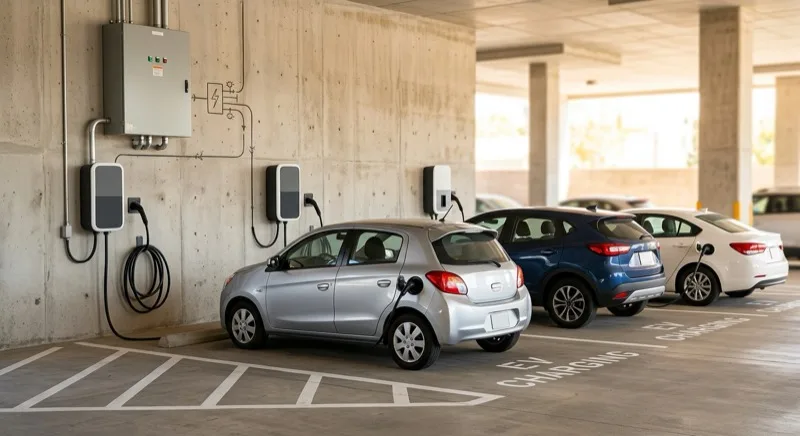
Because shared systems often involve three-phase supply and sub-board work, the single-phase vs three-phase trade-offs are worth understanding before you commit to a design.
If you rent
Renting doesn’t rule out a charger, but the property owner has to agree to it, because installing one is a change to their property.
Tenancy Services guidance is that a tenant can request changes in writing, and a landlord must not unreasonably decline a minor change, though they can set reasonable conditions (Tenancy Services: tenants making changes, verified July 2026). Whether a hardwired EV charger counts as “minor” is a judgement call, and a permanent installation may be treated as more than minor, so approach it as a genuine conversation. Practical things to agree up front:
- Who pays for the install, and who owns the charger afterwards.
- Whether the charger stays with the property or is removed and reinstated when you leave.
- Any reasonable conditions the landlord attaches, such as using a Registered Electrician and receiving the Certificate of Compliance.
If your rental is also inside a body-corporate building, both approvals apply: the owner’s consent and the body corporate’s. As with any tenancy question, treat the official guidance as the source of truth and confirm anything specific with Tenancy Services rather than relying on a summary.
It’s still prescribed electrical work
Whatever the building type, the electrical side doesn’t change. Installing an EV charger is prescribed electrical work in New Zealand, so it must be carried out by a Registered Electrician who issues a Certificate of Compliance on completion. A shared-building job simply adds scope on top of that: common-property wiring, sub-board capacity, metering, and load-management setup.
That extra scope is exactly why EV-charger experience matters more here than for a standalone house. An installer who regularly does unit-title and commercial work will assess the building’s capacity, design the metering, and handle the load-management configuration, rather than treating it like a single home wallbox. Our guide on whether any electrician can install a charger covers what to look for and the questions to ask.
What to have ready before you ask for a quote
Shared-building installs are quoted far more accurately when the installer understands the setup from the start. Useful things to gather:
- Your parking arrangement: whether the bay is allocated to you, and a photo showing where a charger could mount relative to the nearest wall, post or supply point.
- The building type: that it’s a unit-title or body-corporate property is the single most important thing to flag, so consent and metering can be scoped, not just wiring.
- Ownership status: whether you own or rent, and, if you rent, that you’ll need the owner’s consent.
- The supply situation if you know it: whether there’s a spare supply point, whether the building is single- or three-phase, and whether other residents already charge.
- Your EV make and model: to confirm the correct connector and charge rate.
Honest scoping up front saves a wasted site visit and means the quote reflects your actual building, not a generic house install. If several residents are interested, it’s often worth approaching the body corporate about a shared or staged design so the building’s capacity is planned once rather than piecemeal.
Frequently asked questions
Can I install an EV charger in my apartment or unit-title building?
Usually yes, but not on your own. Because your park and the wiring route typically sit on common property, and because a charger adds load to the building's supply, an install generally needs body-corporate approval before work starts. Bodies corporate commonly ask for a professionally installed charger meeting an approved standard, with metering so you pay for your own power. Bring a clear proposal (where the charger goes, where the power comes from, how it's metered) rather than a vague request, and use a Registered Electrician who does unit-title work.
Do I need body-corporate approval to install an EV charger?
In most unit-title buildings, yes. Guidance for New Zealand bodies corporate is that owners cannot install chargers independently because the work affects common-property systems and the building's electrical load, so committee approval and an agreed standard are needed first. The body corporate typically owns the shared cabling pathways and sub-boards, while you own your approved charger. Ask your body corporate or its manager what its rules and approval process require before you commit to hardware.
Who pays for the electricity when I charge in a shared car park?
The goal is that you pay only for the power you use. If your charger runs off a shared supply rather than your own unit's meter, it needs its own metering so your charging isn't spread across everyone's levies. Smart, connected chargers can meter each user and bill them individually, and under the Unit Titles Act a body corporate can install a meter and recover the cost of a service supplied to a unit. Agree the billing method up front.
I rent. Can I get an EV charger installed at my rental?
You can ask, but you need the owner's consent because installing a charger is a change to their property. Tenancy Services guidance is that tenants can request changes in writing and landlords must not unreasonably decline a minor change, though they can set reasonable conditions. A hardwired charger may be treated as more than a minor change, so expect a conversation about who owns and pays for it, and whether it's removed or reinstated when you leave. If your rental is also in a body-corporate building, the body corporate's approval is needed too.
What about load management if lots of residents want to charge?
This is the core technical issue in shared buildings. A building's supply is limited and often has little spare capacity, so several chargers running at once can exceed it. Smart chargers with load management balance the available power across charge points automatically, which can avoid an expensive supply upgrade and lets more residents charge over time. EV-specialist installers design shared-building systems around this, usually starting with an electrical capacity assessment.
Does an apartment or body-corporate charger still need a Registered Electrician?
Yes. The wiring and switchboard work is prescribed electrical work in New Zealand regardless of the building type, so it must be done by a Registered Electrician who issues a Certificate of Compliance on completion. Shared-building work adds extra scope (common-property wiring, sub-board capacity, metering and load management), which is why matching with an installer experienced in unit-title and commercial jobs matters.