Guide
EV charger repair and replacement in New Zealand
Home EV charger not working, tripping the breaker or damaged? How diagnosis works, whether to repair or replace, what it costs, and who can legally do the work in NZ.
Not every EV charger job is a fresh install. Units fault, breakers trip, connectors get damaged, and older chargers eventually reach the end of the road. If your home charger has stopped working, keeps tripping, or you’re weighing up a replacement, this guide covers how a diagnosis works, whether to repair or replace, what it costs, and who can legally do the work.
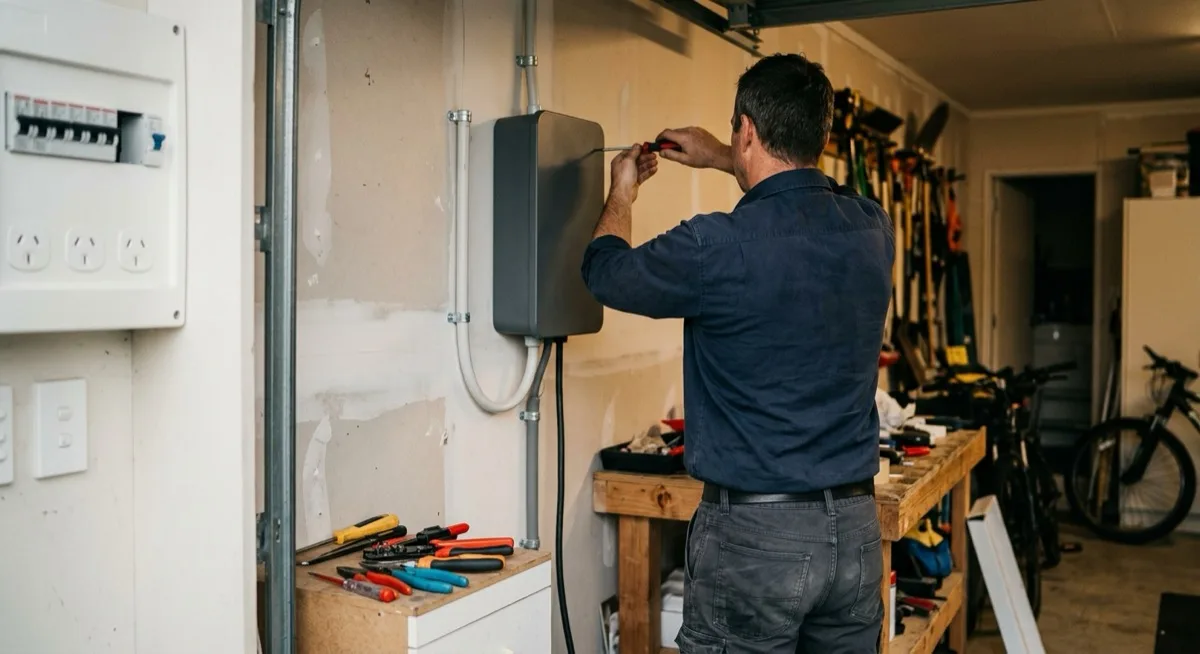
Common faults and what they usually mean
Most home-charger problems fall into a handful of categories:
- It keeps tripping the breaker or RCD. This is the most common complaint, and it’s usually a protection issue rather than a dead charger: a faulty RCD/RCBO, a wiring or earthing fault, moisture in the unit or connector, or a genuine internal fault. Because it involves the protective device on the circuit, it needs proper testing to isolate the cause.
- No power or no lights at all. Could be the supply, the circuit, the switchboard, or the charger. An electrician checks upstream first: a tripped switchboard or a lost circuit is quick to rule in or out.
- Charges intermittently or won’t start a session. Often a connector, cable or communication fault between the car and charger, or a software/firmware issue on a smart charger.
- Physical or weather damage. A cracked case, water ingress, a damaged tethered cable, or a unit knocked in the driveway. Coastal homes see salt-related corrosion sooner.
- App or connectivity problems. Sometimes just a Wi-Fi or account issue rather than a hardware fault. Worth ruling out before booking a callout.
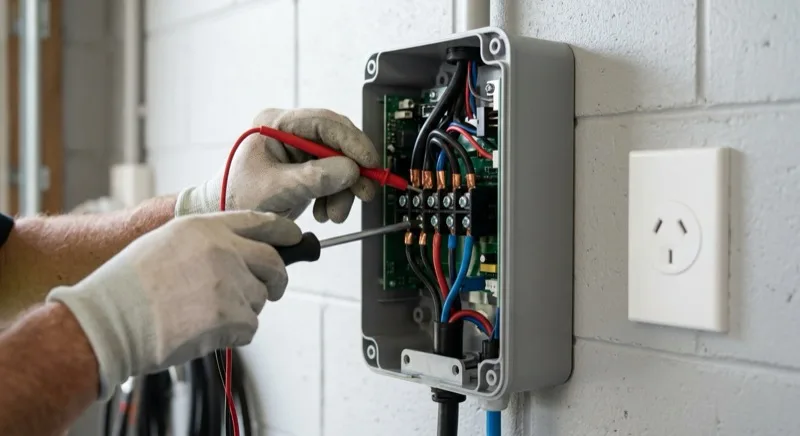
Repair or replace? How to decide
Once the fault is diagnosed, the repair-vs-replace call comes down to three things:
- The nature of the fault. A tripping circuit, a loose connection, or a connectivity glitch is often a straightforward, worthwhile repair. Water ingress, internal electrical damage, or a burnt connector usually points to replacement.
- The age and support of the unit. A two-year-old charger with parts and firmware still available is worth repairing. A first-generation unit that’s out of warranty, out of parts, or no longer getting app updates is often better replaced. You’d otherwise spend money on something near the end of its life.
- Whether the wiring can be reused. This is the big cost lever. If the existing dedicated circuit, cable and switchboard protection are sound and correctly sized, a like-for-like replacement can reuse them, far cheaper than a first-time install. If the fault was in the circuit or the board, that changes the equation.
A Registered Electrician diagnoses the cause before recommending which way to go. A good one won’t sell you a new charger for a fault a repair would fix, and won’t repair a unit that’s clearly on its last legs.
What it costs
Repairs vary too much to quote blind: a callout and a minor fix is modest, while a fault that turns out to be in the circuit or switchboard costs more. A like-for-like replacement that reuses sound existing wiring is usually well below the price of a first install, because the expensive part (running a new dedicated circuit) is already done. If the replacement also needs circuit or switchboard work, it moves back toward full-install pricing. Our installation cost guide explains those drivers. Always get the fault diagnosed first so any quote is based on the real problem, not a guess.
Who can legally do the work
A home EV charger is hard-wired electrical work, so repairs and replacements, like the original install, must be carried out by a Registered Electrician. They can legally test the circuit and unit, repair or replace it, and must issue a new Certificate of Compliance for the work. Be wary of anyone offering to “fix” a hard-wired charger without those credentials. It’s both unsafe and non-compliant.
Getting it looked at
Whether you need a repair or a replacement, the same installers who fit new chargers can help. To speed things up, note the brand, model and rough install date, and describe what happens (for example, “trips the breaker as soon as I plug in” or “no lights on the unit”). Tell us the details in the quote form, including your city — where we have a verified local installer, we match you. See also our regional pages for Auckland, Wellington, Christchurch, Hamilton and Tauranga.
Frequently asked questions
My home EV charger has stopped working: what should I do?
Start by checking whether the charger has lost power at the switchboard (a tripped breaker or RCD is the most common cause) and, if it's safe, reset it once. If it trips straight back, keeps faulting, or there's any sign of heat, water or damage, stop using it and book a Registered Electrician. Note the brand, model and roughly when it was installed, that helps them diagnose it faster.
Why does my EV charger keep tripping the breaker?
Repeated tripping is usually a protection issue rather than a dead charger. Common causes are a faulty RCD/RCBO, a wiring or earthing fault on the circuit, moisture in the unit or connector, or a genuine fault in the charger itself. Because it involves the protective device, it needs a Registered Electrician to test the circuit and the charger and find the actual cause: it's not a DIY reset job.
Is it cheaper to repair or replace an EV charger?
It depends on the fault and the unit's age. A tripping circuit, a connectivity problem or a loose connection is often a straightforward repair. Physical damage, water ingress, or an older unit with no spare parts or firmware support usually means replacement is the sensible call. An electrician will diagnose the cause first, then tell you whether a repair is viable or you're better putting the money toward a new charger.
Can I reuse the existing wiring when replacing my EV charger?
Often yes. If the dedicated circuit, cable and switchboard protection are sound and sized correctly, a like-for-like replacement can reuse them, which keeps a swap much cheaper than a first-time install. The electrician will still test the existing circuit and issue a new Certificate of Compliance for the replacement work.
Who can repair or replace an EV charger in NZ?
A home EV charger is fixed, hard-wired electrical work, so repairs and replacements must be done by a Registered Electrician, the same as the original install. They can legally test, repair or replace the unit and its circuit and issue a Certificate of Compliance. Avoid anyone offering to 'fix' a hard-wired charger without those credentials.
How long do home EV chargers last?
Most quality home chargers are built to last many years of daily use, and typically carry a 3–4 year warranty. Outdoor units in exposed or coastal spots weather faster, and older first-generation chargers may eventually lose app support or spare-parts availability, which is often what tips an otherwise-working unit toward replacement.